



Jordan's Historical Timeline: Tracing 3.5 Million Years of History and Archaeology
Uncover the profound chronology of a land that is history.
- ByKhaled Basheer
- July 7, 2026
There are places that possess history, and then there is Jordan – a land that is history. It is a realm where time is layered into the valleys, etched into the desert cliffs, and kept alive in the hands of its artisans and the ancient rhythms of its villages. Few corners of the earth hold a legacy stretching back 3.5 million years, spanning from the first flint hand-axes struck in prehistoric dawns to the modern Hashemite Kingdom, a steadfast custodian of peace.
As you scroll through our interactive Jordan Timeline, you will witness eras stacked upon one another: kingdoms rising from the ruins of older kingdoms, and empires advancing and receding like tides, each leaving an indelible inheritance for the next. This article walks beside that timeline, era by era, so that when you walk the sacred ground itself, you will know exactly what you are standing upon.
Jordan's Historical TimeLine
The Stone Age: Where Humanity First Took Shape (3.5 Million to 6,500 years ago)
Long before Petra’s facades were carved or Jerash’s columns raised, Jordan was already a stage for one of the oldest stories in human history. When the Asian-African Rift tore the Levant apart some three to four million years ago – splitting it into a low coastal west and a high eastern plateau – it also carved the Jordan Valley into one of the most consequential corridors on earth: the great passage through which early humans moved out of Africa and into Asia and Europe.
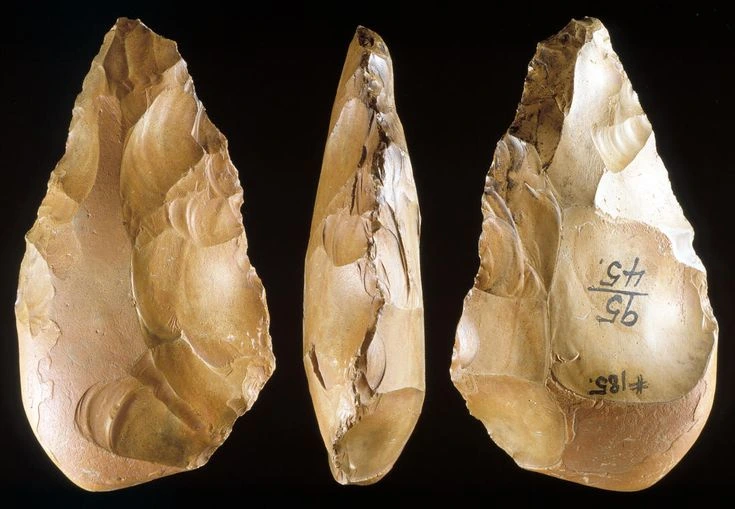
The Paleolithic in Jordan spans an almost incomprehensible 3.5 million years, divided into three great chapters. In its earliest phase, the Lower Paleolithic (roughly 3.5 million to 300,000 years ago), two distinct cultures shaped the human story here. The Oldowan culture (3.5 to 1.8 million years ago) represents humanity’s first toolmakers – people who struck simple but purposeful flakes from stone. They were followed by the Acheulean culture (1.7 million to 100,000 years ago), whose craftsmen refined the hand-axe into a symmetrical, tear-shaped tool so successful it was used virtually unchanged across a million years and three continents. It was during this Acheulean age that Homo erectus first crossed the Levantine land bridge out of Africa, and Jordan – sitting at the very hinge of that crossing – was where the journey paused. Jordan was then a far greener, wetter world, home to elephants, hippos, and rhinoceroses, shaped by ancient lakes whose waterlines still scar the rock. The site of Doughara, on the Zarqa River north of Amman, has yielded stone tools and animal bones dating back nearly one million years, among the oldest evidence of human presence in the region.
The Middle Paleolithic (300,000 to 28,000 years ago) brought the Levallois, Mousterian, and Aurignacian cultures – increasingly refined toolmaking traditions that spread across the landscape as populations grew. Sites from this era have been found across an astonishing range of environments: in the stratified deposits of the Jordan Valley at Tabaqat Fahl, in the rock shelters of Wadi al-Hasa in west-central Jordan, and far into the eastern plateau at Al-Mudawwara – evidence that human settlement was not confined to river valleys but reached deep into the highland steppe. In the mountains near Shobak, Wadi al-Bustan sheltered communities who appear to have returned there repeatedly, using it as a hunting camp on seasonal migrations between Wadi Araba and the highlands above.
The Upper Paleolithic (28,000 to 22,000 years ago) coincided with the last Ice Age – a colder, drier world – yet Jordan’s ancient lakes paradoxically kept certain landscapes rich and populated. Around Wadi al-Hasa, where a great lake once stretched across 50 square kilometers, archaeologists have identified some 70 sites from this period alone: open camps on the plain and rock shelters on the slopes, all within reach of the shore. The bones found in these sites speak of a world still abundantly alive: gazelle, wild boar, wild cattle, and tortoise – a seasonal larder drawn from the lake’s edge.
The Epipaleolithic (22,000 to 12,000 years ago) is, perhaps surprisingly, the richest period in Jordan’s prehistoric record in terms of sheer number and variety of sites – a reflection of growing populations and an increasingly complex relationship with the landscape. The period opens with the Kebaran and Geometric Kebaran cultures and closes, around 15,000 years ago, with the Natufian culture that would bridge the prehistoric world and the dawn of civilization.
Then, around 15,000 years ago, something changed. As the great ice released its grip, the slopes and steppes of the Near East grew warm, moist, and extravagantly fertile – oak forests, stands of pistachio and almond, and vast carpets of wild wheat and barley. For the first time, there was no longer any need to follow the food. The food had come to the people.
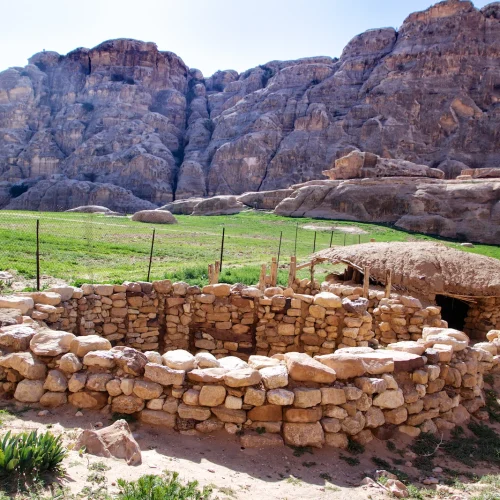
It was the Natufians (15,000–11,500 years ago) who first took that invitation seriously. They dug round pit houses with dry-stone walls and thatched roofs, gathering into permanent settlements for the first time in human experience. They harvested wild grain with wooden sickles inset with sharpened flint blades and ground it into flour. It was a first, tentative attempt at settled life, and it did not last. Around 12,800 years ago, a cold and arid spell known as the Younger Dryas descended on the region and the wandering began again. But the idea of staying put had taken root, and nothing would be quite the same again.
The Neolithic (roughly 10,500–6,500 years ago) is where belonging became civilization. Archaeology has upended the old assumption that settled life only followed the invention of agriculture – in fact, it was the other way around. People gathered first, drawn by wild abundance, and it was the need to manage that abundance – to coordinate harvests, build grain stores, defend territory – that ultimately drove the cultivation of crops and the domestication of animals. The revolution was social before it was agricultural.
That transformation is written into the very architecture of Jordan’s Neolithic sites. Round pit houses gave way, over generations, to rectangular multi-roomed structures raised on stone foundations, their walls and floors finished in colored plaster – a technique that reached its most extraordinary expression at ‘Ain Ghazal, on the outskirts of modern Amman.
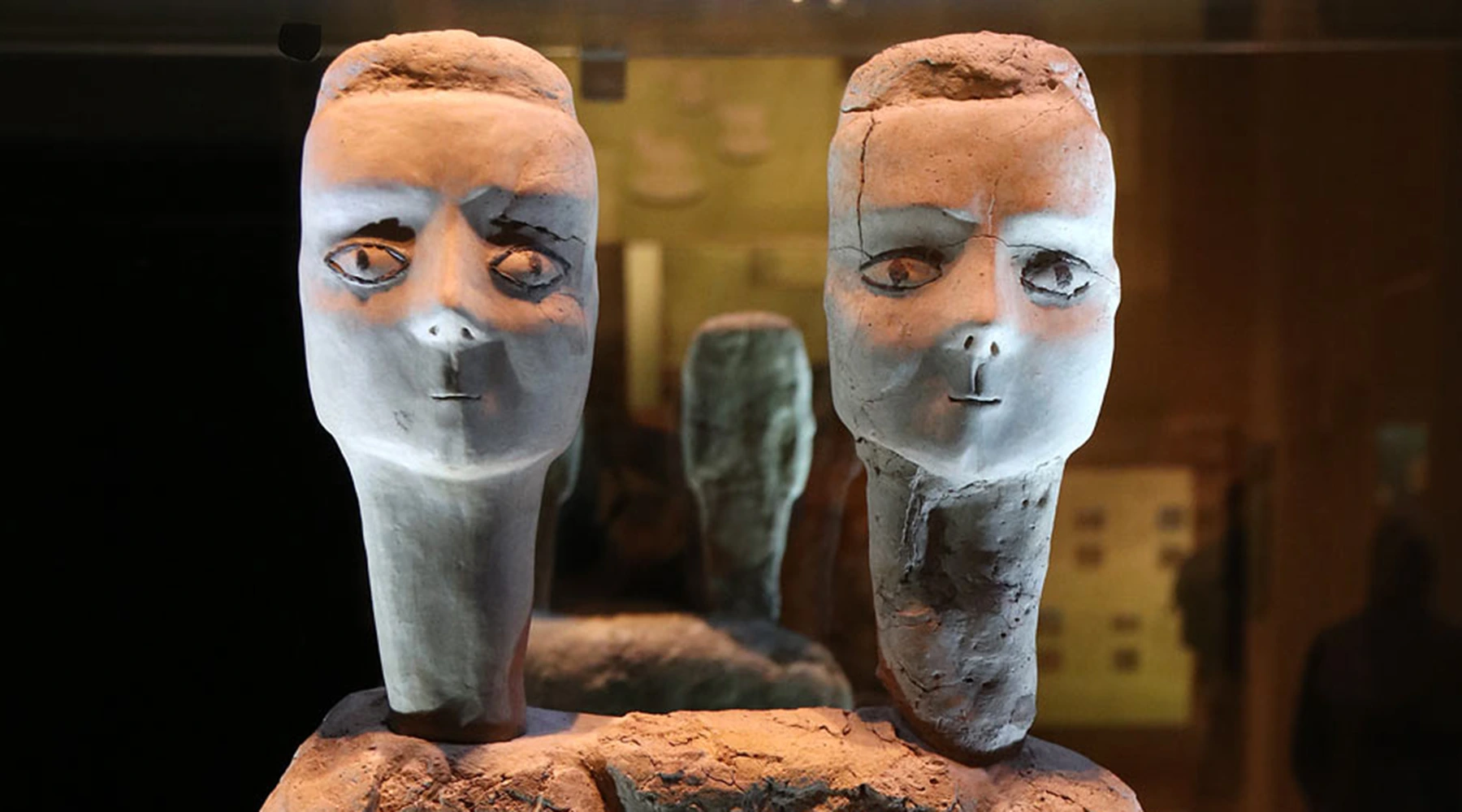
Active from around 7250 to 5000 BCE, ‘Ain Ghazal grew into one of the largest Neolithic settlements in the ancient Near East – home at its peak to perhaps three thousand people, a genuine town by the standards of its age. But what it gave the world was something stranger and more haunting than its size: in 1983 and 1985, archaeologists uncovered two buried caches containing 32 human statues and busts, crafted from lime plaster over reed armatures, their eyes rimmed in bitumen carried from the Dead Sea. Some stand over a metre tall. They are among the oldest large-scale human figures ever made – predating the Egyptian pyramids by millennia – and their purpose remains beautifully, stubbornly mysterious. What is certain is that the people who made them were not primitive survivors: they were artists, thinkers, and community-builders of remarkable sophistication.
By the close of the Neolithic, one final revolution arrived: pottery. The fired ceramic vessel transformed daily life far beyond the kitchen – liquids stored, grain preserved across seasons, communities able to plan for the year ahead. Quiet, practical, and utterly world-changing. Much like Jordan itself.
The Chalcolithic Age: The Age of Crafts and the First Chiefs (7,800 to 5,600 years ago)
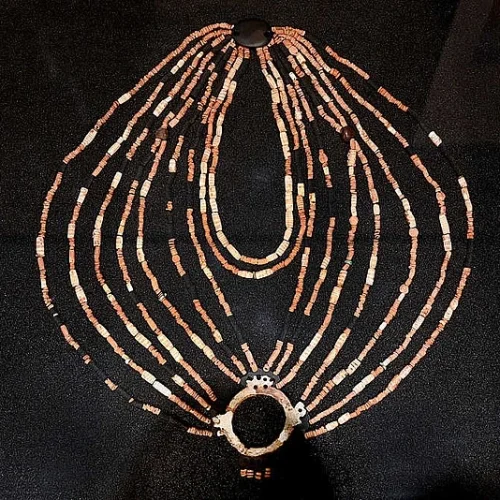
The Chalcolithic (7,800 to 5,600 years ago) – copper in Greek – marks the moment prehistory begins to feel startlingly modern. This was the age of crafts: the first use of copper tools, the invention of the plough, the rise of organized trade, and the emergence of something that looks unmistakably like social hierarchy. Communities were no longer just surviving together; they were beginning to govern together.
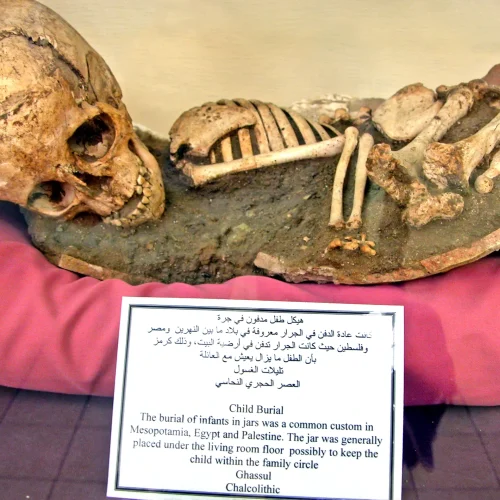
The Jordan Valley was the beating heart of Chalcolithic life, and the most revealing site is Tuleilat al-Ghassul, east of the Dead Sea. Large centralized grain stores found there suggest that wealth – and perhaps power – were beginning to concentrate in fewer hands. It is, in quiet archaeological terms, the first glimpse of a chief.
What Ghassul also gave the world was art. The wall paintings discovered there – geometric patterns and enigmatic star-like forms rendered in red, white, and black on smooth lime plaster – are among the oldest murals in the ancient Near East. Layer upon layer of paintings were applied over generations, each sealed beneath a fresh coat of plaster, creating an accidental archive of artistic life that still astonishes researchers today.
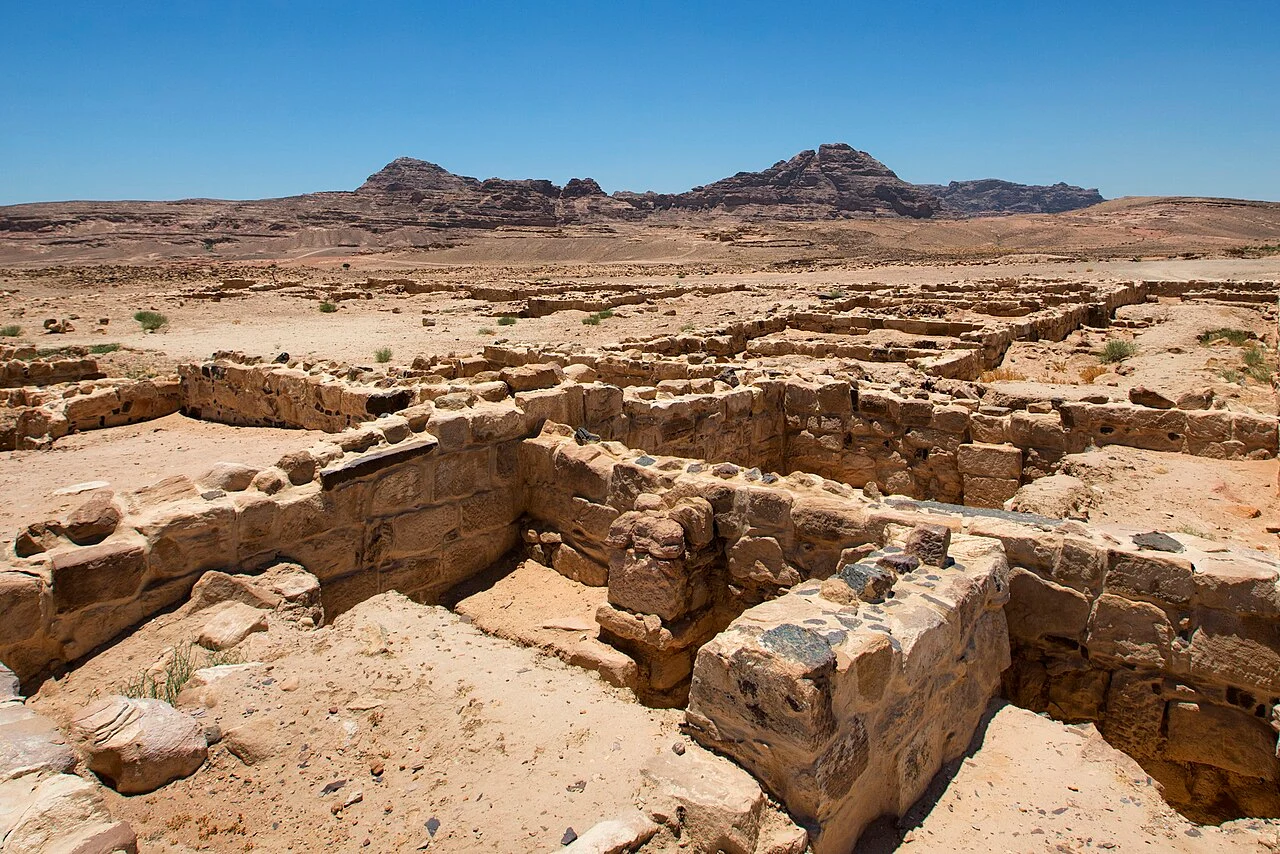
Copper itself was, paradoxically, rare in Jordan’s own settlements. The rich deposits of Wadi Faynan in the south were being mined – but the ore was exported almost exclusively to workshops further west for processing. Jordan was already, in the fifth millennium BCE, a supplier in a regional economy that stretched well beyond its own borders.
The Bronze Age: Cities, Pharaohs, and the Age of Interaction (3,500 to 1,200 BCE)
The Bronze Age (3,500-1,200 BCE) is where Jordan steps out of prehistory and into the full drama of the ancient world – a story of cities rising, empires competing, and a small but strategically vital land navigating the ambitions of the great powers around it.
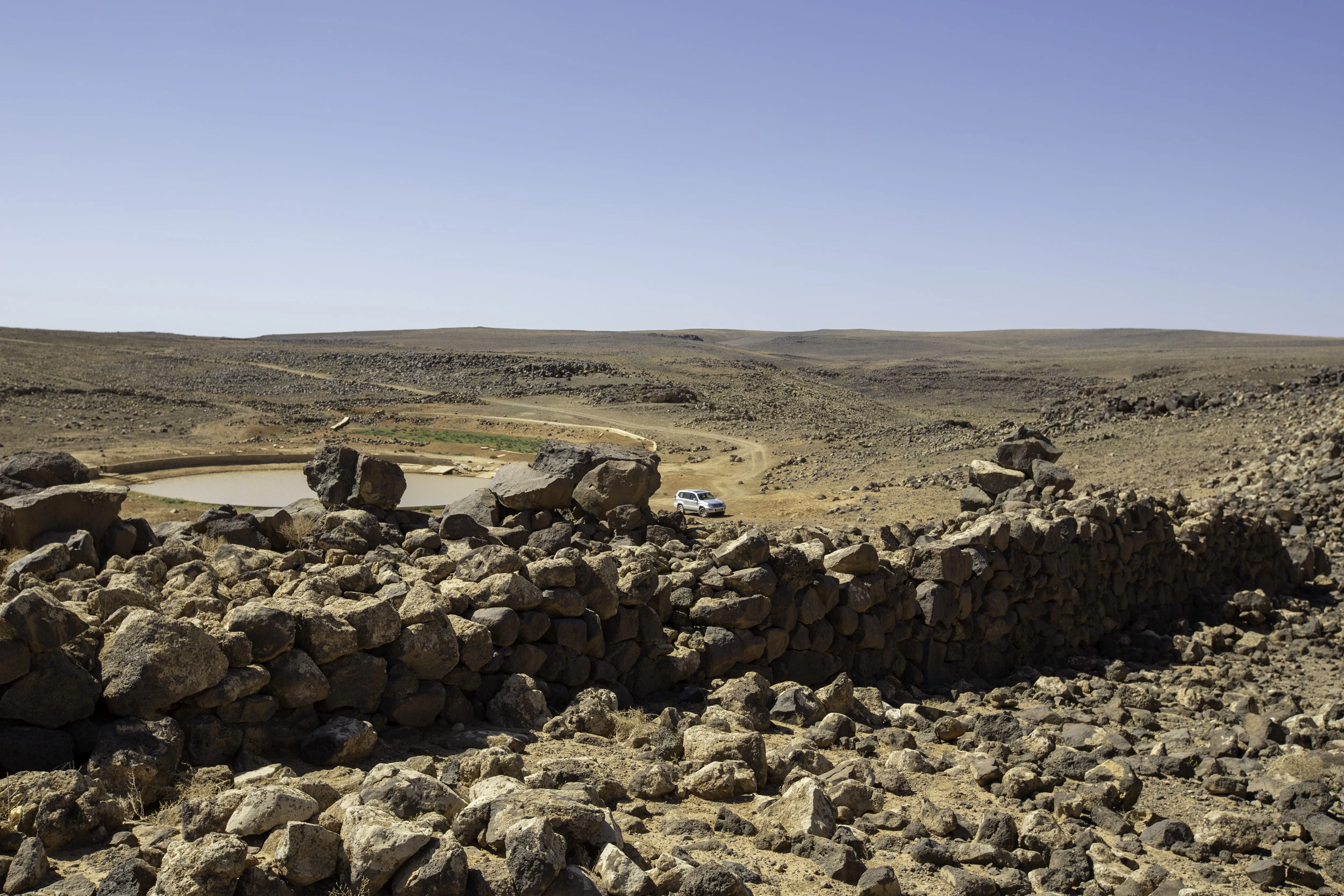
The Early Bronze Age brought something entirely new to the landscape: the city. Settlements that had been villages became walled urban centers, complete with temples, gate complexes, and sophisticated water systems. At Jawa, in the volcanic basalt desert of the northeast, engineers built a network of stone dams to capture seasonal flash floods – an extraordinary feat of hydraulic planning in one of Jordan’s most forbidding environments.
The Middle Bronze Age saw an even more dramatic urban flourishing, deeply entangled with Egypt and the expansion of Canaanite civilization. Tabaqat Fahl – ancient Pella – holds the distinction of being the longest continuously inhabited site in Jordan, settled from the Neolithic to the present day, and by this era a fortified city significant enough to draw the attention of the Egyptian pharaohs themselves.
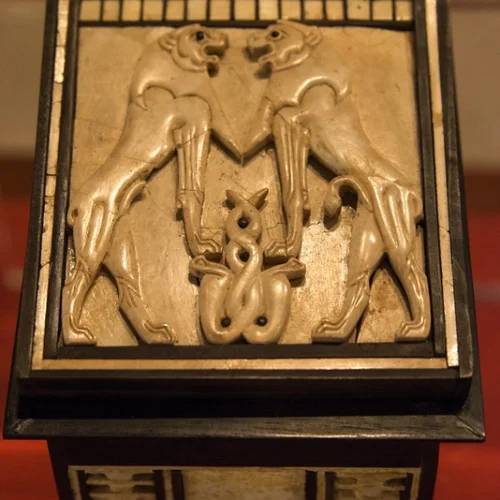
The Late Bronze Age is truly the age of international interaction. At Tabaqat Fahl, a carved ivory box depicting two roaring lions – the Lion Box – testifies to the luxury and artistic sophistication of the era.
By around 1,200 BCE, the Egyptian presence had withdrawn and the stage was being set for the kingdoms that would give Jordan some of its most enduring biblical identity.
The Iron Age: Blood, Iron, and Belief — Kingdoms of the Biblical Era (1200 to 539 BCE)
Then the great Bronze Age civilizations collapsed around 1,200 BCE – the Hittite empire crumbling, Egypt retreating, the mysterious Sea Peoples sweeping across the eastern Mediterranean – the world Jordan had known for two thousand years fell with them. Cities were abandoned, trade networks dissolved, and the old system of palace-controlled city-states gave way to something altogether different: the nation-state. It was out of this upheaval that three of the most storied kingdoms in all of scripture rose from Jordan’s highlands – Ammon, Moab, and Edom – and carved their names into both the archaeological and the biblical record forever.
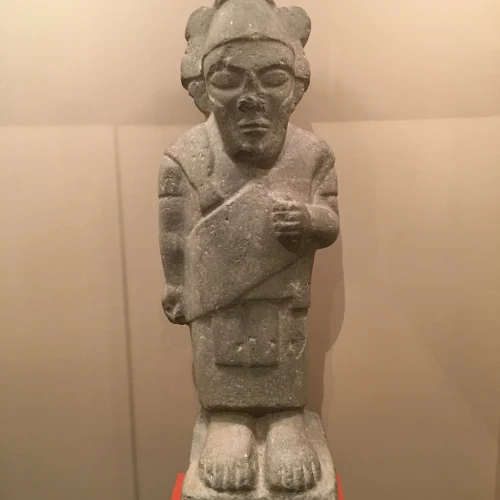
Ammon rose on the plateau of central Jordan, its capital at Rabbath-Ammon – the very citadel hill at the heart of modern Amman. The Ammonites worshipped the god Milcom and built a kingdom sophisticated enough to construct an impressive royal palace on the citadel, flanked by a network of some 150 watchtowers spread across their territory. In the Hebrew Bible, the Ammonites appear repeatedly as neighbors, rivals, and occasional enemies of Israel – their king Nahash clashing with Saul in the Book of Samuel, their territory the destination of Israelite refugees after the fall of Jerusalem. They were prosperous enough to pay tribute to the Assyrian kings while maintaining their own royal institutions, and they left behind carved stone statues of remarkable quality – proud, serene male figures whose style is distinctly their own, neither fully Assyrian nor fully Egyptian, but something defiantly Jordanian.
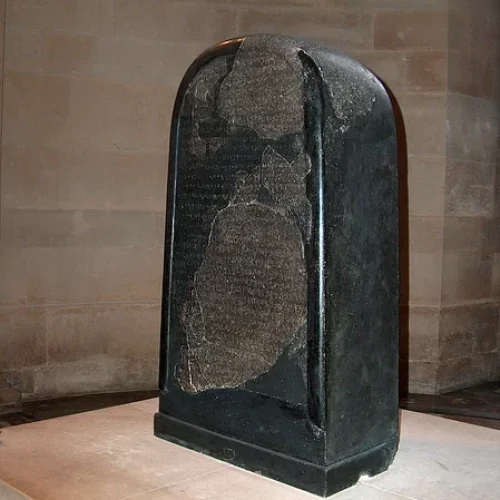
Moab commanded the high tableland east of the Dead Sea, its capital at Dibon – today the town of Dhiban – and its people devoted to the god Chemosh. The Moabites enter the biblical narrative early: it is through Moab that the Israelites pass in the Book of Numbers on their way to the Promised Land, and it is from Moab that the Book of Ruth begins its journey – Ruth herself a Moabitess, and one of the Bible’s most beloved figures. But the greatest gift Moab left to history is not literary: it is stone. The Mesha Stele, a black basalt monument raised by King Mesha around 840 BCE and discovered at Dhiban in 1868, is one of the most extraordinary archaeological finds in the entire ancient Near East. Carved in Mesha’s own words, it records his military victories over Israel – including his recapture of territories once held by the Israelite king Omri – and contains one of the earliest references outside the Bible to the “House of David” and to the god Yahweh. It is a Moabite king’s voice, speaking across three thousand years, telling his own side of a story the Bible told from another.
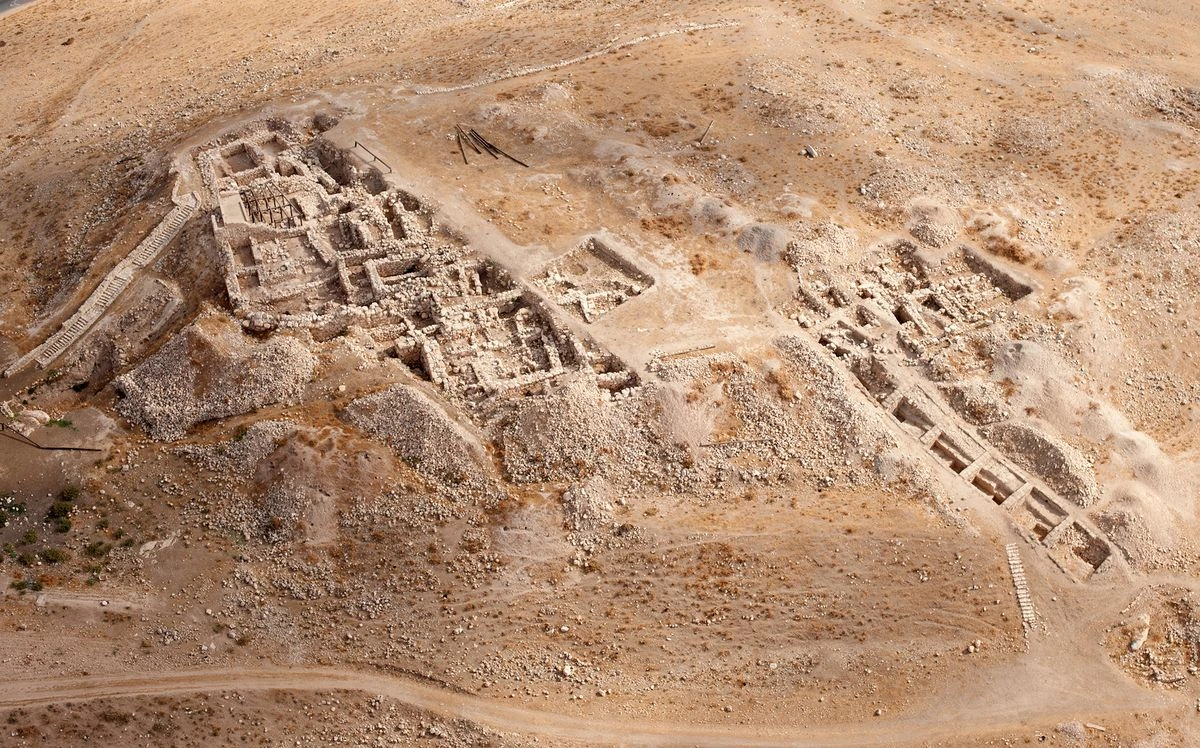
Edom held the rugged highlands of southern Jordan – the landscapes that would later become Petra and Wadi Rum – while controlling access to the copper-rich lowlands of Wadi Faynan and Wadi Araba below. The Edomites appear in biblical tradition as the descendants of Esau, making them the “elder brothers” of Israel in the genealogies of Genesis. Their capital was Bozrah – today’s Buseirah – a fortified highland city that controlled the King’s Highway and the lucrative trade routes running north from Arabia. But Edom’s true wealth lay beneath the ground: the copper mines of Khirbet Nahas in Wadi Faynan, which recent excavations have shown were operating on an industrial scale as early as the 10th century. The scale of smelting activity at Khirbet Nahas is staggering: slag heaps covering acres of desert, evidence of a copper industry that fed the ancient world’s appetite for metal on a scale previously unimagined for this period.
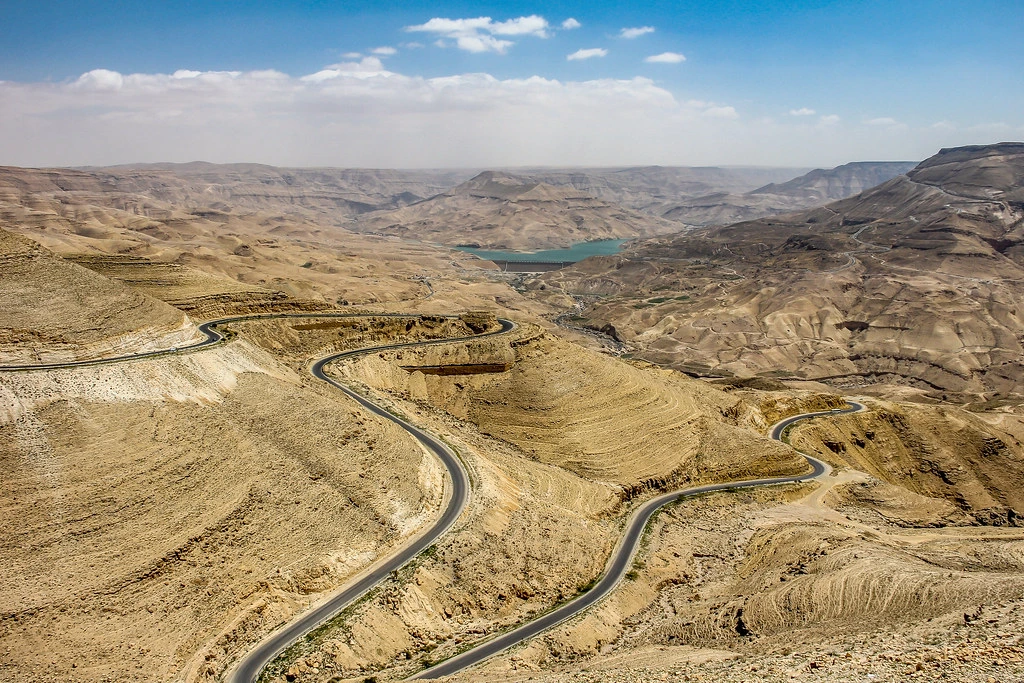
No feature of Jordan’s landscape shaped its Iron Age history more profoundly than the King’s Highway – one of the oldest continuously used trade routes in the world, running the length of the country from the Gulf of Aqaba in the south to Damascus in the north. Its name appears in the Book of Numbers, when Moses requests safe passage through Edom along “the King’s Highway,” promising to neither eat nor drink from the land – a passage that captures both the road’s antiquity and its political significance. All three of Jordan’s Iron Age kingdoms – Ammon, Moab, and Edom – owed much of their wealth and strategic importance to their position along or beside this route. It carried frankincense and spices from Arabia, copper from Wadi Faynan, grain from the plateau, and the ambitions of every empire that ever looked toward the Levant. To control the King’s Highway was to control the commerce of the ancient world – and Jordan’s Iron Age kings understood this perfectly.
The end of these kingdoms came not from within but from the east. The Assyrian empire had been extracting tribute from Ammon, Moab, and Edom since the 9th century BCE, their kings recorded in Assyrian annals paying gold, silver, and precious goods to avoid destruction. When Assyria fell, Babylon inherited its ambitions. In 586 BCE, Nebuchadnezzar destroyed Jerusalem and extinguished the Kingdom of Judah. Within decades, his armies turned east across the Jordan: Ammon and Moab fell around 570 BCE, Edom in 553 BCE. The three kingdoms that had shaped Jordan’s Iron Age identity for six centuries were absorbed into the Babylonian empire, their royal institutions dissolved, yet their peoples endured, their cultures lived on in the land, and their legacy continued to echo through every civilization that followed.
The Persian Period: A New Order from the East (539-332 BCE)
When Cyrus the Great swept out of Persia in 539 BCE and swallowed the Babylonian empire whole, Jordan passed – almost without drama – into the hands of the Achaemenid dynasty. It became part of the vast satrapy known as “Abar Nahara” – Beyond the River – a administrative province stretching from the Euphrates to the Mediterranean that the Persians governed with a notably light hand. Unlike the Assyrians and Babylonians, who ruled through fear and forced deportation, the Achaemenids allowed conquered peoples to maintain their local institutions, languages, and religions – a policy of pragmatic tolerance that made their empire the largest the ancient world had yet seen.
For Jordan, this meant a period of relative stability and quiet recovery. Local communities rebuilt, trade along the King’s Highway continued to flow, and the material culture of the period shows a fascinating blend of Persian administrative influence alongside deep continuities with the Iron Age traditions that preceded it.
It was also during this period that a new people began quietly appearing in the southern highlands, moving into the territories once held by Edom. They were Arab nomads from the northern Arabian Peninsula, skilled traders and desert navigators. History would come to know them as the Nabataeans – and their moment was coming.
Persian rule ended as suddenly as it had begun. In 332 BCE, a young Macedonian king named Alexander crossed into the Levant and dismantled the Achaemenid empire in a campaign of breathtaking speed. Jordan, once again, changed hands – and entered the glittering, turbulent world of the Hellenistic age.
The Nabataean Kingdom: Masters of the Desert (4th Century BCE - 106 CE)
They began as nomads – Arab tribes moving seasonally across the desert with their herds, their tents, and an intimate knowledge of where water could be found in landscapes that defeated everyone else. It was this knowledge, more than any army or political ambition, that made the Nabataeans the most remarkable civilisation Jordan ever produced.
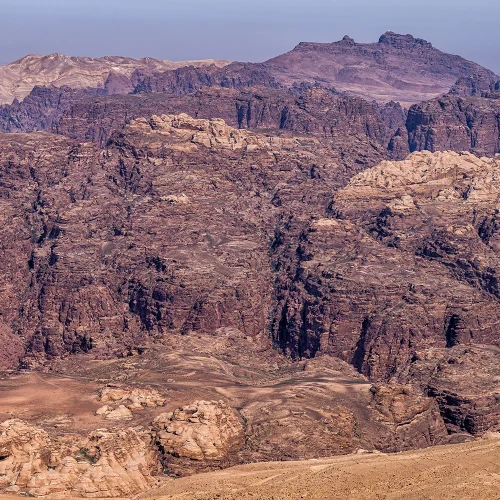
As the Persian empire gave way to Alexander’s conquests and the great Hellenistic powers jostled for control of the Levant, the Nabataeans quietly moved into the vacuum left by the Edomites in the southern highlands. By the late 4th century BCE they had established themselves around a narrow sandstone canyon the Greeks called Petra – and which the Nabataeans themselves called Raqmu. The site made little obvious sense as a capital: there was no natural water source, the terrain was forbidding, and the canyon offered no agricultural land. But the Nabataeans were not farmers – they were traders and engineers, and what Petra offered was something more valuable than soil. It sat at the precise convergence of the most important trade routes in the ancient world: the Incense Road running north from Yemen and Arabia, the routes west to Gaza and the Mediterranean, and the roads north to Damascus and beyond. To sit at Petra was to sit at the crossroads of the ancient world’s economy.
The wealth that flowed through those routes was extraordinary. Frankincense and myrrh from southern Arabia, spices from India, silk from China, copper from Wadi Faynan, grain from the Hauran – all of it passed through Nabataean territory, taxed and managed by a kingdom that turned desert knowledge into commercial empire. At their height, under the great King Aretas IV (9 BCE – 40 CE), the Nabataeans controlled a territory stretching from Damascus in the north to Hegra – today’s Mada’in Saleh in Saudi Arabia – in the south, making them one of the most powerful and prosperous kingdoms in the entire Near East.
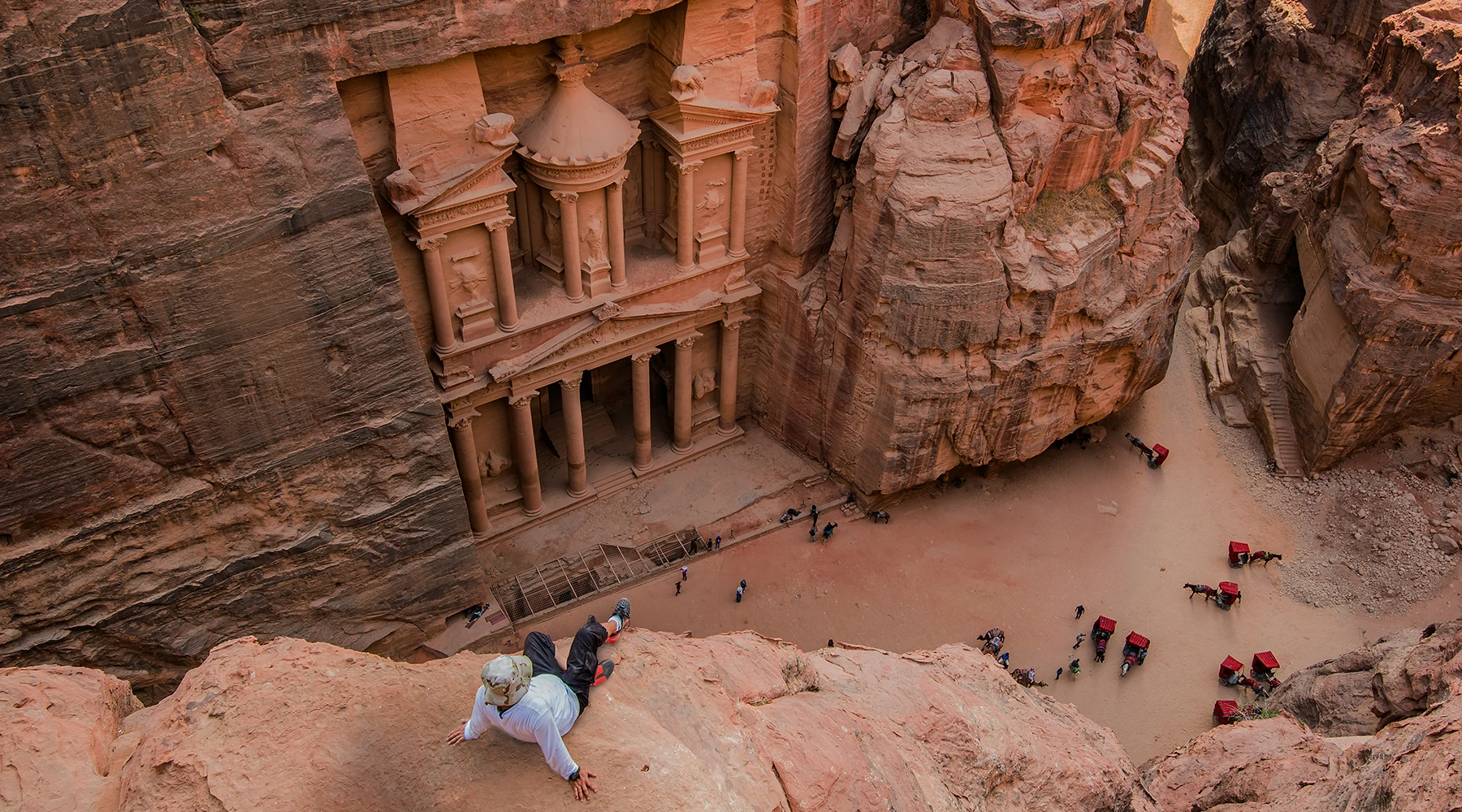
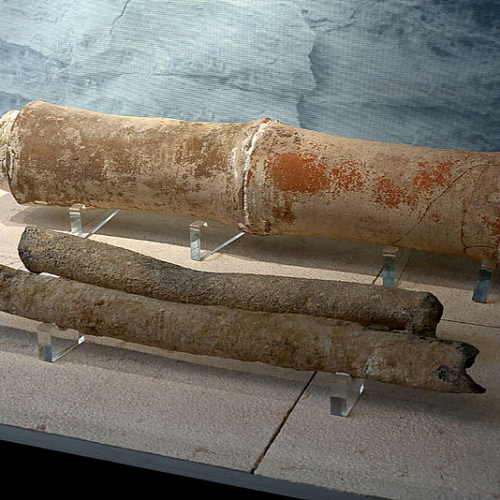
But the Nabataeans’ true genius was not commerce – it was water. Petra sits in one of the driest landscapes on earth, yet at its peak it was home to perhaps 20,000 people living among gardens, fountains, and public pools. The engineers who made this possible constructed an astonishing network of dams, cisterns, channels, and ceramic pipelines that captured every flash flood and every winter rain, directing water across mountains and through gorges to supply a city that had no business existing in the desert at all. Walking through the Siq – the narrow, winding canyon that serves as Petra’s ceremonial entrance – you can still see the carved channels running along both walls, carrying water inward to the city two thousand years ago. It is one of the most quietly extraordinary engineering achievements of the ancient world.
The city they built in that desert was equally extraordinary – a metropolis whose facades blended Hellenistic columns and Egyptian cornices with purely Nabataean forms into something the world had never seen. The Treasury – the Khazneh – greets every visitor at the end of the Siq with a facade of almost theatrical perfection, its rose-red sandstone carved with such precision that it seems impossible it was never built but excavated directly from the living rock. And yet the Treasury is just the beginning: beyond it lies a theatre, a colonnaded street, royal tombs, temples, and a high place of sacrifice perched on the ridge above the city – an entire urban world carved from stone.
The Nabataeans were also remarkable for another reason seldom noted: they were among the most literate and egalitarian societies of their age. Their script – a flowing, cursive form of Aramaic – is the direct ancestor of the Arabic alphabet used across the Arab world today, one of the most consequential cultural inheritances any ancient civilisation has ever given to the modern world. And their queens appeared on coins beside their kings, named and portrayed as equal partners – a practice that speaks of a society more open than most of its contemporaries.
The end came in 106 CE, when the Roman Emperor Trajan annexed the Nabataean Kingdom following the death of its last king, Rabbel II. Whether this was a peaceful transition or involved military force remains debated – some epigraphic evidence hints at a campaign led by the Roman governor of Syria, Cornelius Palma, while other sources suggest a largely uncontested handover. What is certain is that the kingdom was absorbed into the Roman Empire and renamed Arabia Petraea, with Bosra in the north replacing Petra as the provincial capital. Petra continued to flourish for a time under Roman rule, receiving the title “Metropolis of Arabia” and gaining new colonnaded streets and temples. But the overland spice routes that had made the Nabataeans rich were gradually superseded by sea routes, trade drifted north to Palmyra, and a devastating earthquake in 363 CE shattered much of the city’s infrastructure.
Yet the Nabataeans did not simply disappear. Their script became Arabic. Their water systems outlasted their kingdom by centuries. Their trading networks shaped the commercial geography of the entire Middle East. And their rose-red city, lost to the wider world for over a thousand years, waits still at the end of the Siq – patient, pink, and utterly unforgettable.
The Hellenistic Period: Greek Ambition Meets Eastern Resilience (332 to 63 BCE)
When Alexander the Great swept through the Levant in 332 BCE, dismantling the Persian empire with breathtaking speed, Jordan passed into a new world almost overnight – one of Greek language, Greek architecture, and Greek political ambition. But the Hellenistic age in Jordan was never simply a story of Greek dominance. It was a story of encounter, negotiation, and the remarkable resilience of the peoples who had lived here long before any Macedonian army arrived.
The first dramatic illustration of this came almost immediately. After Alexander’s death in 323 BCE, his generals – the Diadochi – fought savagely over the pieces of his empire. One of them, Antigonus, cast his eye toward the Nabataeans and their growing wealth. In 312 BCE he dispatched his officer Athenaeus with 4,000 infantry and 600 cavalry to raid the Nabataean stronghold at Petra while its people were away at a festival, making off with silver, frankincense, myrrh, and a large number of camels. The Nabataeans pursued and destroyed the Greek force almost entirely – and then sent Antigonus a remarkably composed letter, written in Aramaic, protesting the unprovoked attack and offering to trade instead. Antigonus sent a second force. It too was repelled. The episode established something important: the Nabataeans would not be easily subdued, and the desert was always on their side.
Jordan’s Hellenistic story was shaped equally by the two great dynasties that divided Alexander’s empire between them – the Ptolemies of Egypt and the Seleucids of Syria – who spent much of the next two centuries fighting over the Levant as their battleground. Jordan sat squarely in the middle of that contest, and its cities reflect the cultural energy that resulted. Greek became the language of administration and commerce, and local elites adopted Greek names and fashions while quietly maintaining their own languages and traditions beneath the surface. The material evidence from this period in Jordan is modest – the Hellenistic layers lie buried beneath the far more visible Roman cities that followed – but it was during these years that the seeds of the great urban centers were planted. Jerash – ancient Gerasa – and Philadelphia – modern Amman, built over the old Ammonite capital of Rabbath-Ammon – were taking shape as Hellenistic towns, their civic institutions forming, their populations growing, laying the foundations upon which Rome would later build some of the most spectacular cities in the ancient world.
The Hellenistic period ended not with a dramatic battle but with the inexorable westward advance of a new power. In 63 BCE, the Roman general Pompey swept through the Levant, reorganized its political geography, and brought Jordan – along with the rest of the region – into the orbit of Rome. The Seleucid kingdom was finished. The Ptolemies clung on in Egypt for a few more decades. And Jordan stepped, once again, into a new era – one that would give it some of its most enduring and magnificent monuments.
Roman Period: Pax Romana to the Cross - Rome and Byzantium (63 BCE - 636 CE)
The Roman Period (63 BCE - 324 CE)
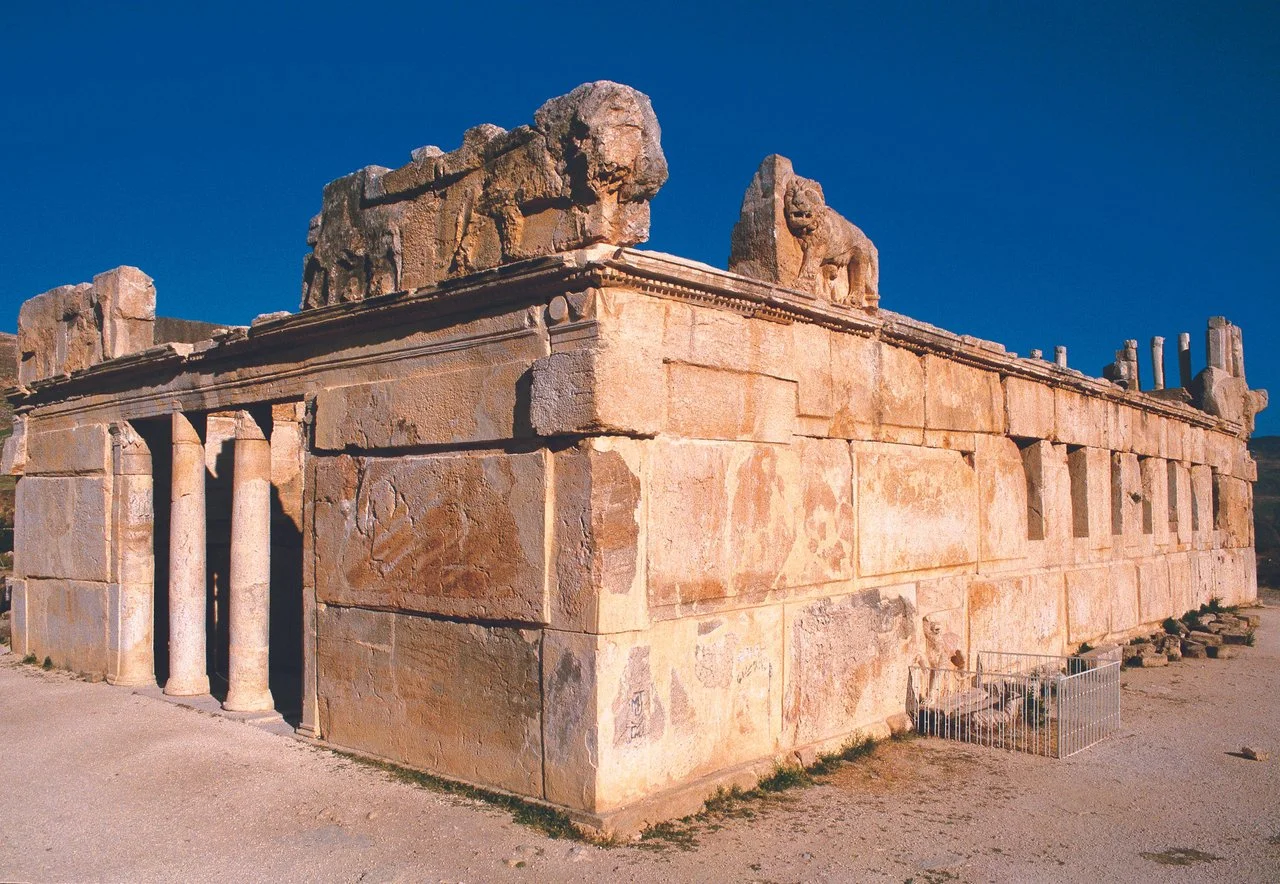
When the Roman general Pompey swept through the Levant in 63 BCE, reorganizing its political geography with the efficiency of a man who had already conquered half the known world, Jordan passed into Rome’s orbit almost without resistance. The Hellenized cities of the region – long chafing under Hasmonean Jewish rule – welcomed him as a liberator. In return, Pompey granted a group of these cities’ autonomy under Roman protection, creating what would become known as the Decapolis – the Ten Cities. The arrangement was as strategic as it was generous: Rome favored the independence of these cities and wished to promote them as a counterweight to the Judaean and Nabataean kingdoms, sitting to the west and east respectively. Most of the cities formed a continuous territorial bloc east of the Jordan River, serving as centers of Greek culture, trade, and Roman defense on the eastern frontier, each enjoying a high degree of autonomy – minting their own coins and maintaining their own laws – while remaining firmly within Rome’s protective sphere. Then, in 106 CE, with the annexation of the Nabataean Kingdom and the creation of the province of Arabia Petraea, Jordan became fully and formally Roman – and what followed was one of the most spectacular episodes of city-building the ancient world had ever seen.
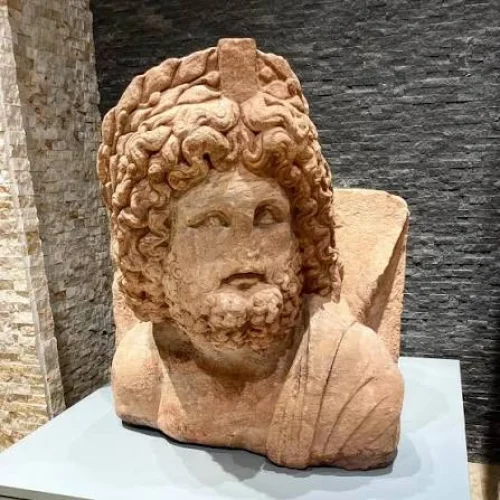
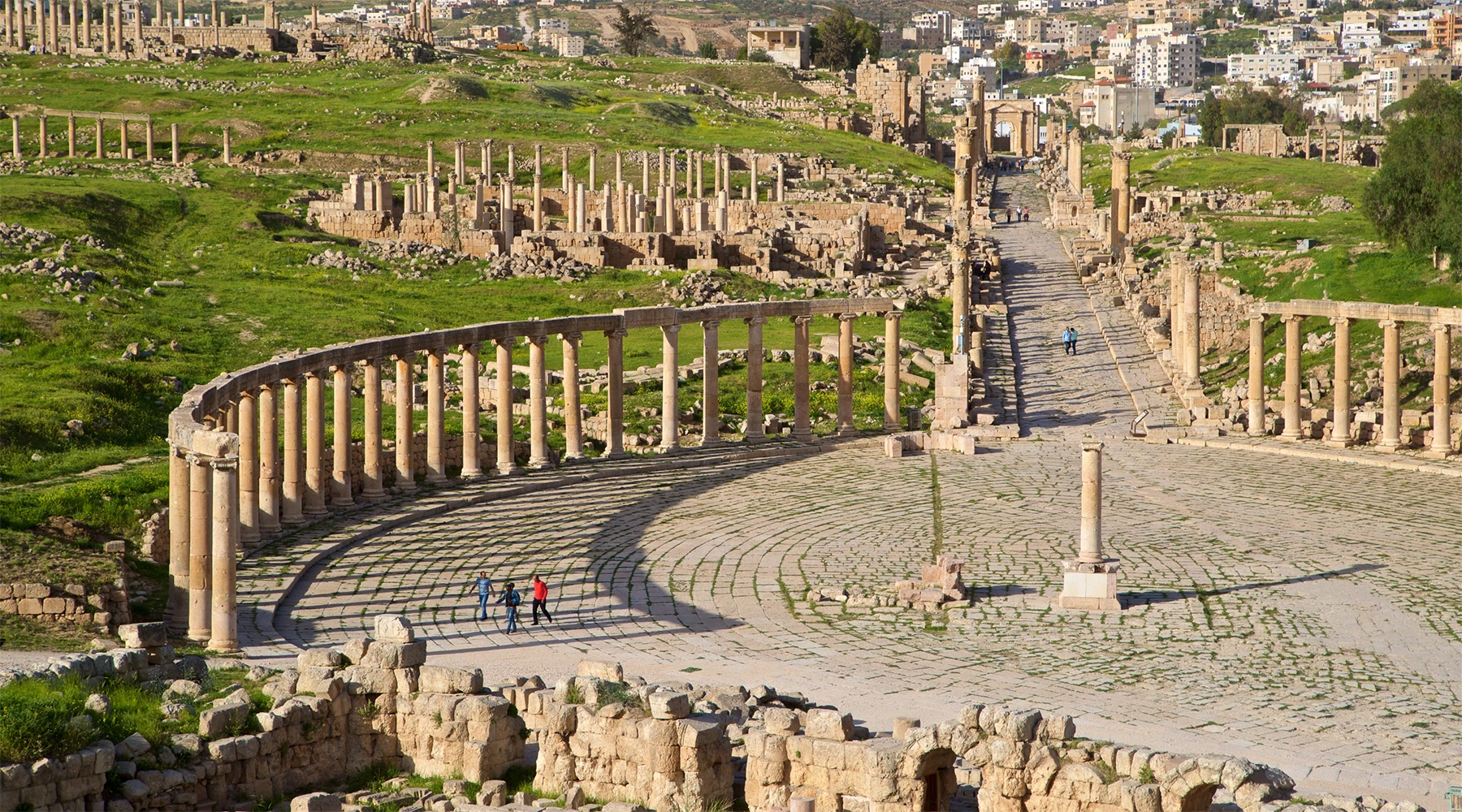
At the heart of this story is Jerash – ancient Gerasa – one of the best-preserved Roman provincial cities in existence. Walking through Jerash today is to walk through a city that time has barely interrupted: its Oval Plaza, its colonnaded Cardo Maximus, its Temple of Zeus begun as early as 22 CE, and the soaring Temple of Artemis – the largest building in Jerash, completed around 150 CE – still rise from the same hilltops where they were first raised. The city’s walls stretched 3,500 meters and enclosed over 85 hectares, sheltering a population estimated at 17,000 to 20,000 people. What makes Jerash particularly remarkable is that much of its construction was funded not by the imperial treasury but by private donations – wealthy citizens competing in generosity to embellish their city.
Philadelphia – modern Amman – tells its own layered story. The old Ammonite citadel hill was crowned with the Temple of Hercules, built between 161 and 167 CE and visible from the entire lower city below. It was raised directly atop an older Ammonite temple to Milcom – two faiths, two civilizations, stacked one upon the other in stone. It is perhaps the most eloquent metaphor Jordan has to offer: a land that does not erase what came before, but builds upon it.
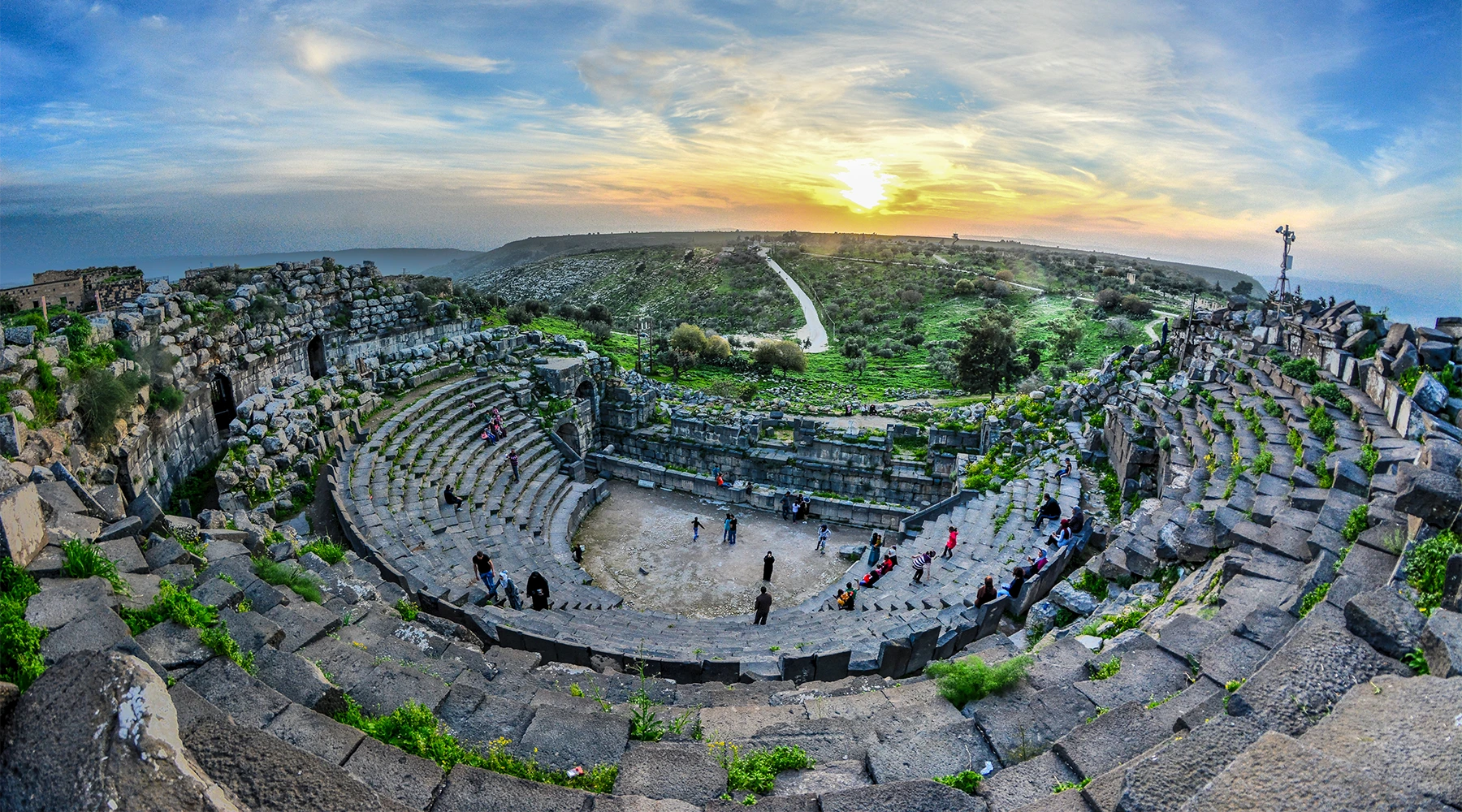
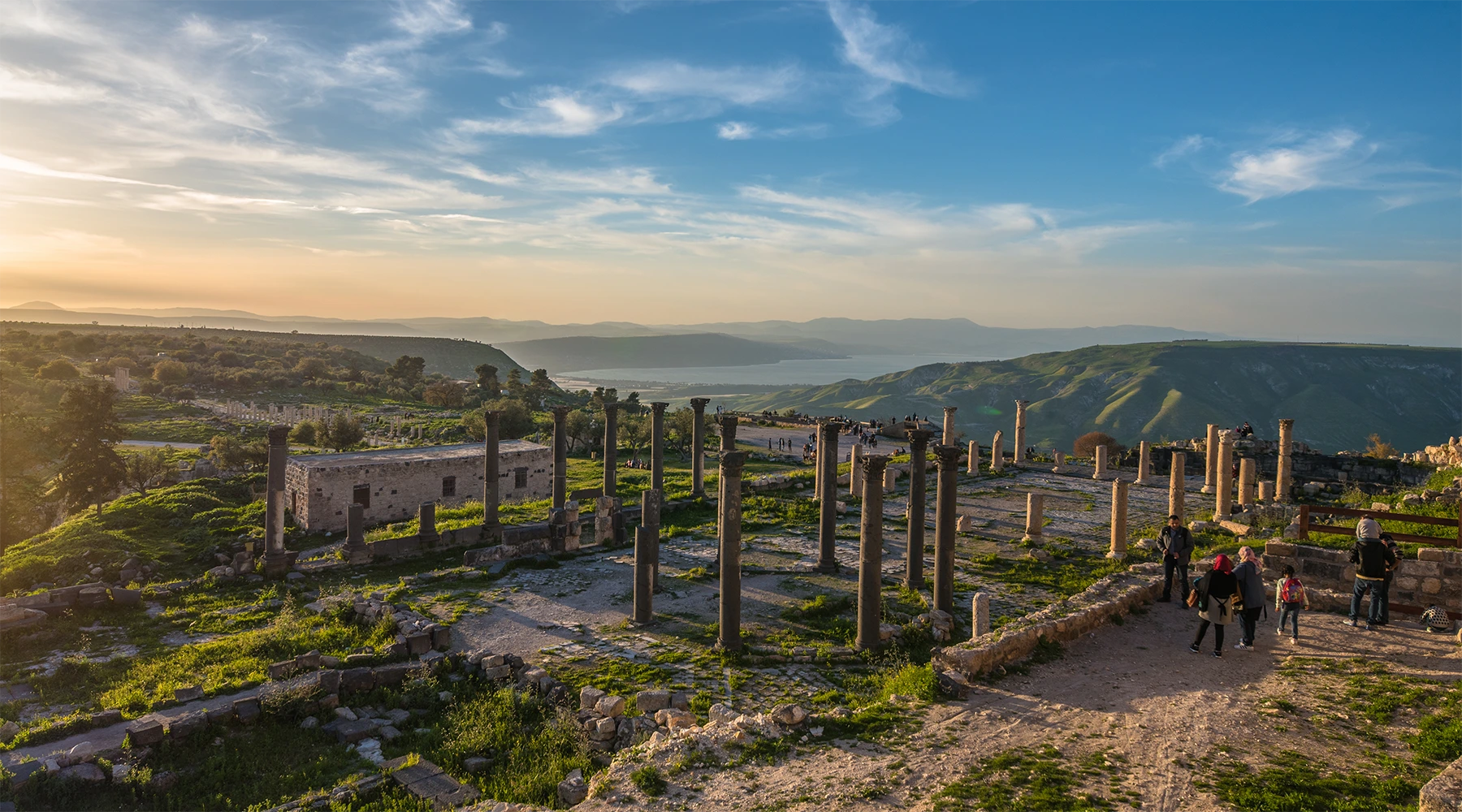
Gadara – modern Umm Qais – was, by ancient reputation, one of the most cultured and intellectually vibrant cities of the Decapolis. Perched on a dramatic hilltop overlooking the Jordan Valley, the Sea of Galilee, and the Golan Heights, it commanded one of the most breathtaking panoramas in the entire ancient world. The city produced poets, philosophers, and rhetoricians of genuine renown – among them Meleager, one of the greatest epigrammatists of the ancient world, who wrote with nostalgic affection of his hometown’s beauty. Its theatre, baths, colonnaded streets, and an ambitious water tunnel system – two networks of tunnels totaling 750 meters carved beneath the city to bring water from distant springs – speak of a community that matched its intellectual ambitions with engineering ones. Gadara was also, notably, one of the cities that pushed back against Roman administrative decisions: when Augustus transferred it to the rule of Herod the Great, its citizens appealed all the way to Rome to be released from his governance and returned to the province of Syria – and eventually won.
The economic engine behind this urban flowering was threefold: caravan trade taxed as it crossed the province, fertile agricultural land worked by thriving rural communities, and industry. The copper mines of Faynan, known since the Chalcolithic, were reopened and expanded under Rome to a scale that staggers the imagination – over 300 mines working ore that left more than 70,000 tons of slag in the desert, feeding the empire’s insatiable appetite for metal.
The great Roman building program peaked in the 2nd century CE – theatres, public baths, nymphaea, colonnaded streets, triumphal arches – and by its mid-point, every monumental building a Roman city was expected to have was already standing. The 3rd century brought relative quietude, and the 4th century a transformation that would change Jordan’s landscape more profoundly than any emperor’s building program ever had.
The Byzantine Period (324 - 636 CE)
When the Emperor Constantine legalized Christianity in 313 CE and moved his capital to Constantinople, Jordan’s world shifted on its axis. For this was not merely an administrative change – it was a spiritual reorientation of the entire empire toward a region that lay at the very heart of the Christian story. The Holy Land was just across the Jordan River. The baptism of Jesus had taken place on its banks. Moses had seen the Promised Land from its heights. Pilgrims began arriving from every corner of the Christian world, and Jordan – already one of the most densely populated and prosperous regions in the empire – entered its most extraordinary age.
The Byzantine period brought Jordan to its highest population density in all of antiquity. Settlements spread not just through the fertile northwest but deep into the eastern steppe and the southern desert. Churches appeared in extraordinary numbers – Jerash alone eventually had fifteen – and with them came the art form that defines this era more than any other: the mosaic.
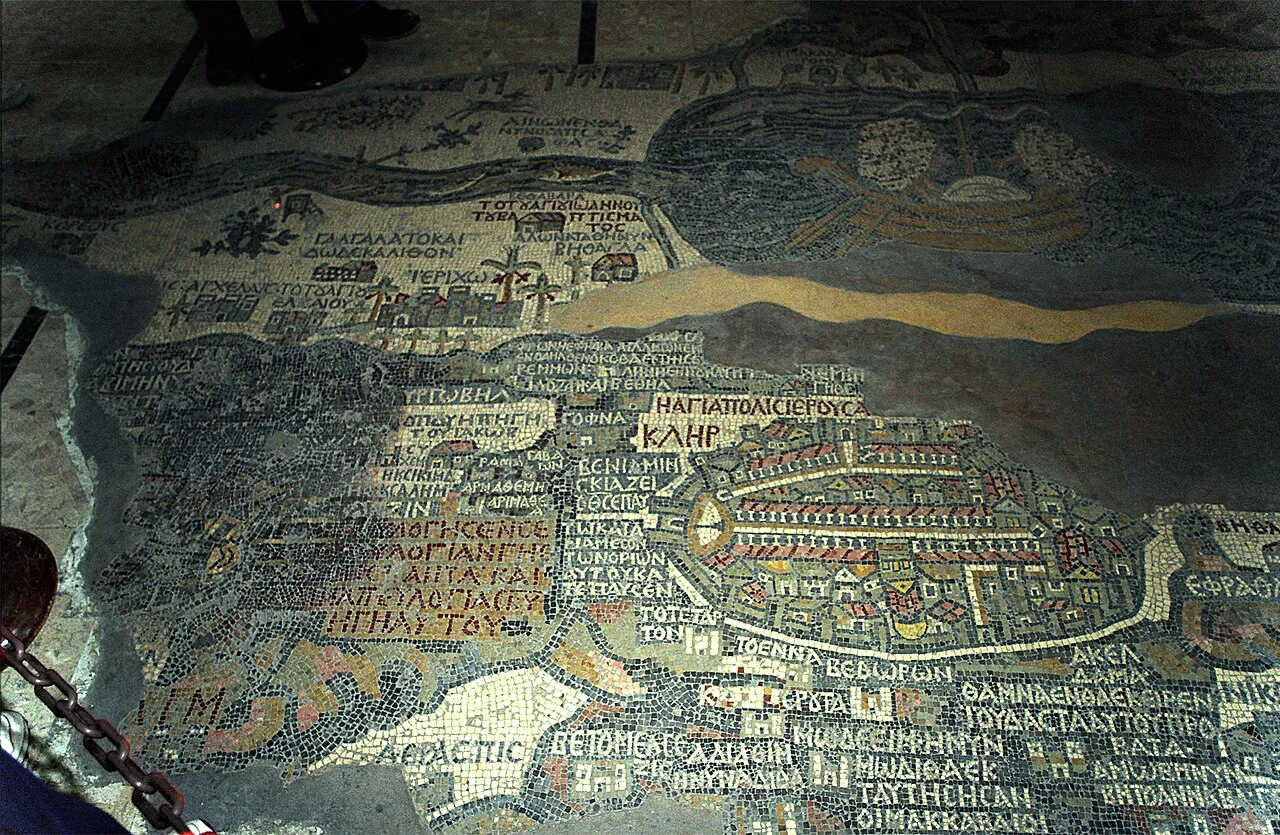
Madaba became the capital of this mosaic world. Its church floors, laid by craftsmen of breathtaking skill, covered thousands of square meters with scenes of biblical narrative, hunting, farming, and geography rendered in millions of hand-cut tesserae. The most celebrated of these is the Madaba Map, a 6th-century floor mosaic in the Church of Saint George depicting the Holy Land and its surroundings with remarkable cartographic accuracy – 157 cities and sites identified, with Jerusalem at its centre, surrounded by landmarks that can still be matched to the ground today. It is the oldest surviving map of the Holy Land and one of the great artistic achievements of the Byzantine world.
A short distance away, Mount Nebo drew pilgrims as the place where Moses is said to have gazed across the Jordan Valley to the Promised Land before his death, its Byzantine church eventually adorned with mosaics of exceptional quality. And at Bethany Beyond the Jordan, on the river’s eastern bank, the site identified as the location of Christ’s baptism by John became one of the most sacred pilgrimage destinations in the Christian world – visited by the faithful from Rome, Constantinople, and beyond.
The great irony of the Byzantine period is that its very prosperity carried within it the seeds of its end. The empire’s long wars with Sassanid Persia exhausted both sides: the Persian king Khosrow II invaded and occupied the Levant between 613 and 628 CE, carrying the True Cross from Jerusalem to his capital – a trauma from which Byzantium never fully recovered. When the Emperor Heraclius finally expelled the Persians and returned the Cross to Jerusalem in 630 CE, he had little time to savor the victory. Within six years, a new force had emerged from the Arabian Peninsula. In 634 CE, Muslim forces won a decisive battle at Tabaqat Fahl. In 635 CE, Damascus fell. And in 636 CE, the Battle of Yarmouk ended Byzantine rule in the Levant forever. Nearly a thousand years of Greek and Roman civilization in Jordan drew to a close – leaving behind its theatres, its mosaics, its churches, and its roads, all of which the next age would inherit and make its own.
The Islamic Period: From the First Revelation to the Ottoman Twilight (636 - 1918 CE)
Jordan’s transition into the Islamic world was not a rupture but a return – a land whose Arab tribes had long known the Arabian Peninsula’s rhythms, trade routes, and peoples now becoming part of a civilization that would reshape the entire known world. The process began not with the great conquests but with something far more intimate: the Prophet Muhammad himself had traveled through Jordan’s lands as a young merchant accompanying his uncle on trading expeditions to Syria, and later as an agent for Khadijah bint Khuwaylid, long before the first revelation descended. When Islam finally came to Jordan, it came to a land that was, in a sense, already familiar.
The Rashidun Caliphate (632 - 661 CE)
The first military contact between Islam and Jordan came at Mu’tah, near modern Karak, in 629 CE, followed by the decisive Battle of Yarmouk in 636 CE – fought on Jordanian soil and ending nearly a thousand years of Greco-Roman rule in the Levant in a single afternoon. Crucially, many of the Arab tribes of the region – among them the Ghassanids, who had long served as Byzantine allies – switched sides or stood aside during the battle, their loyalty to Constantinople having been exhausted by decades of broken promises and mistreatment. The Byzantine presence in the Levant collapsed not only under military pressure but under the weight of its own failure to hold the allegiance of the peoples it ruled.
Jordan entered the Islamic world, and has remained within it ever since. Yet the transition was far gentler than the drama of the battlefield might suggest. Under the Rashidun Caliphs, and particularly the Caliph Umar ibn al-Khattab – who personally traveled to Jerusalem to accept its surrender, signing one of the most remarkable documents of the medieval world guaranteeing the safety of the city’s Christian and Jewish inhabitants and their holy sites – the new administration extended to the people of Jordan something the Byzantine Empire had rarely offered: genuine freedom of faith. More than seventy percent of the region’s population remained Christian, Jewish, or Samaritan under early Islamic rule, their churches and synagogues protected, their communities governed by their own religious laws. It was a model of coexistence that would define Jordan’s character for centuries to come.
The Rashidun reorganized the region into administrative districts – the Ajnad – replacing Byzantine bureaucracy with an Arab Islamic framework while preserving much of the existing civic infrastructure. Mosques began to appear alongside churches in the towns and villages, marking the new faith’s presence without erasing the old. The fertile plateau of Balqa became so renowned for its grain production that it was called “the storehouse of wheat,” while the south was celebrated for its olive groves, vineyards, date palms, and saffron fields. It was a land of abundance entering a civilization of ambition – and the combination would prove extraordinary.
The Umayyad Dynasty (661 - 750 CE)
When Muawiyah ibn Abi Sufyan established the Umayyad Caliphate and moved its capital to Damascus in 661 CE, Jordan became one of the most strategically significant regions in the Islamic world. Its people had been among the most loyal supporters of the Umayyad house, its lands sat astride the great commercial and pilgrimage routes connecting Arabia, Syria, Egypt, and Iraq, and its Arab tribes were a political force that no caliph could afford to ignore. The Umayyads understood this well – and they invested accordingly.
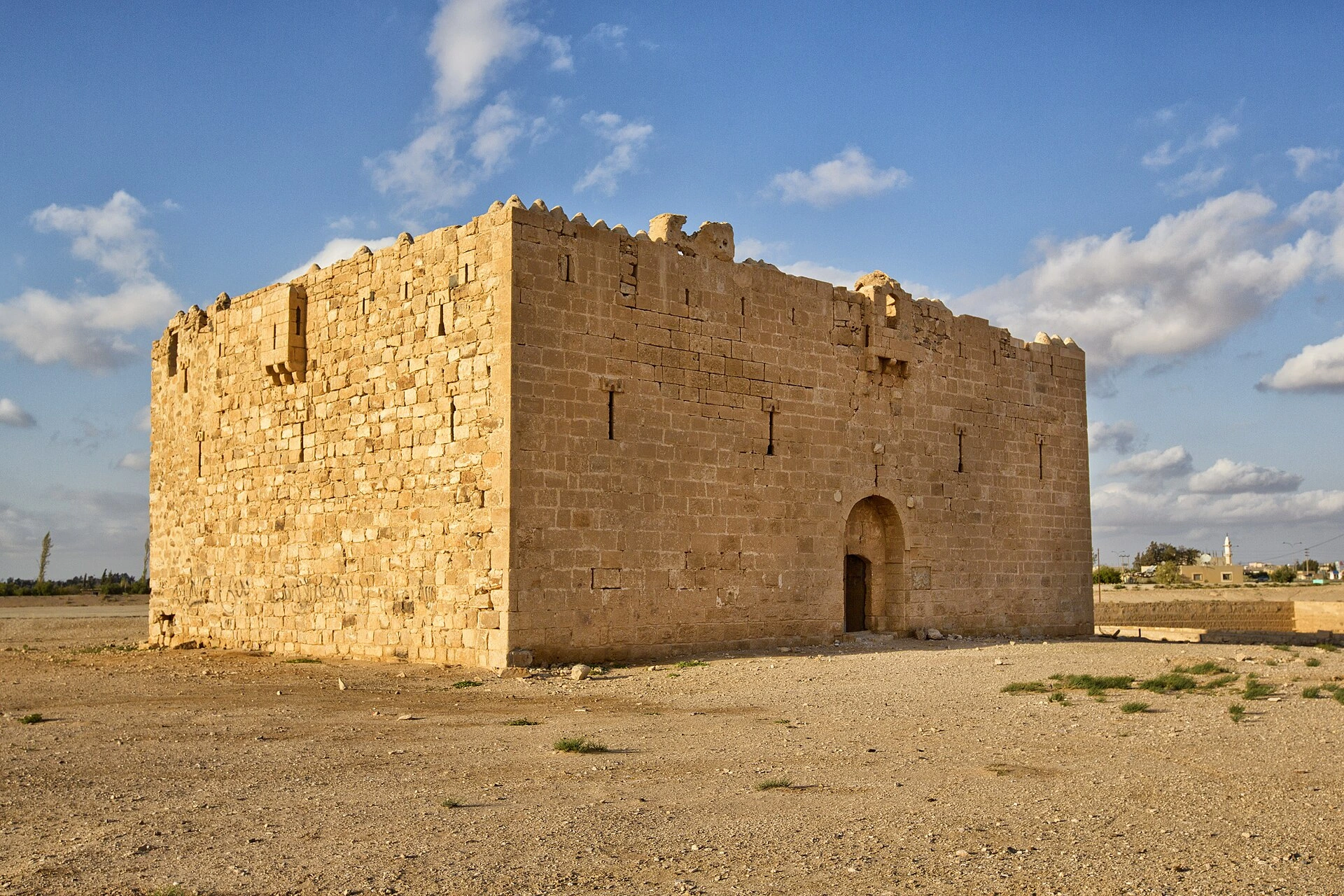
The most visible expression of that investment is the remarkable network of buildings known today as the desert castles, scattered across the eastern Jordanian steppe. These were not simply pleasure retreats, as popular tradition sometimes suggests – they were deliberate instruments of Umayyad statecraft. Built along the tribal territories of the eastern desert, they served as centers of political engagement where caliphs and princes could meet the tribal leaders of the region, receive their delegations, renew their loyalties, and demonstrate the presence and power of the state in areas far beyond the reach of the urban administration in Damascus. They were also positioned along the Hajj routes and commercial corridors, combining political, economic, and religious functions in a single architectural statement.
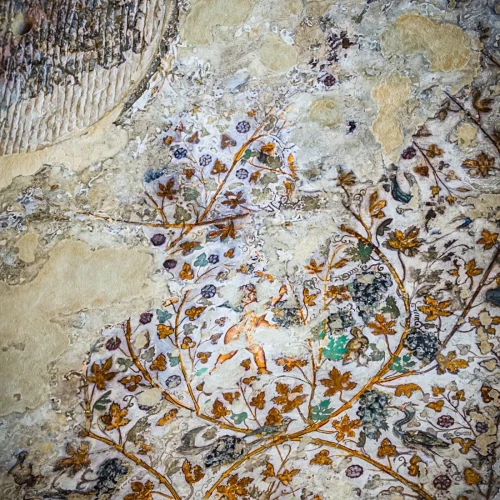
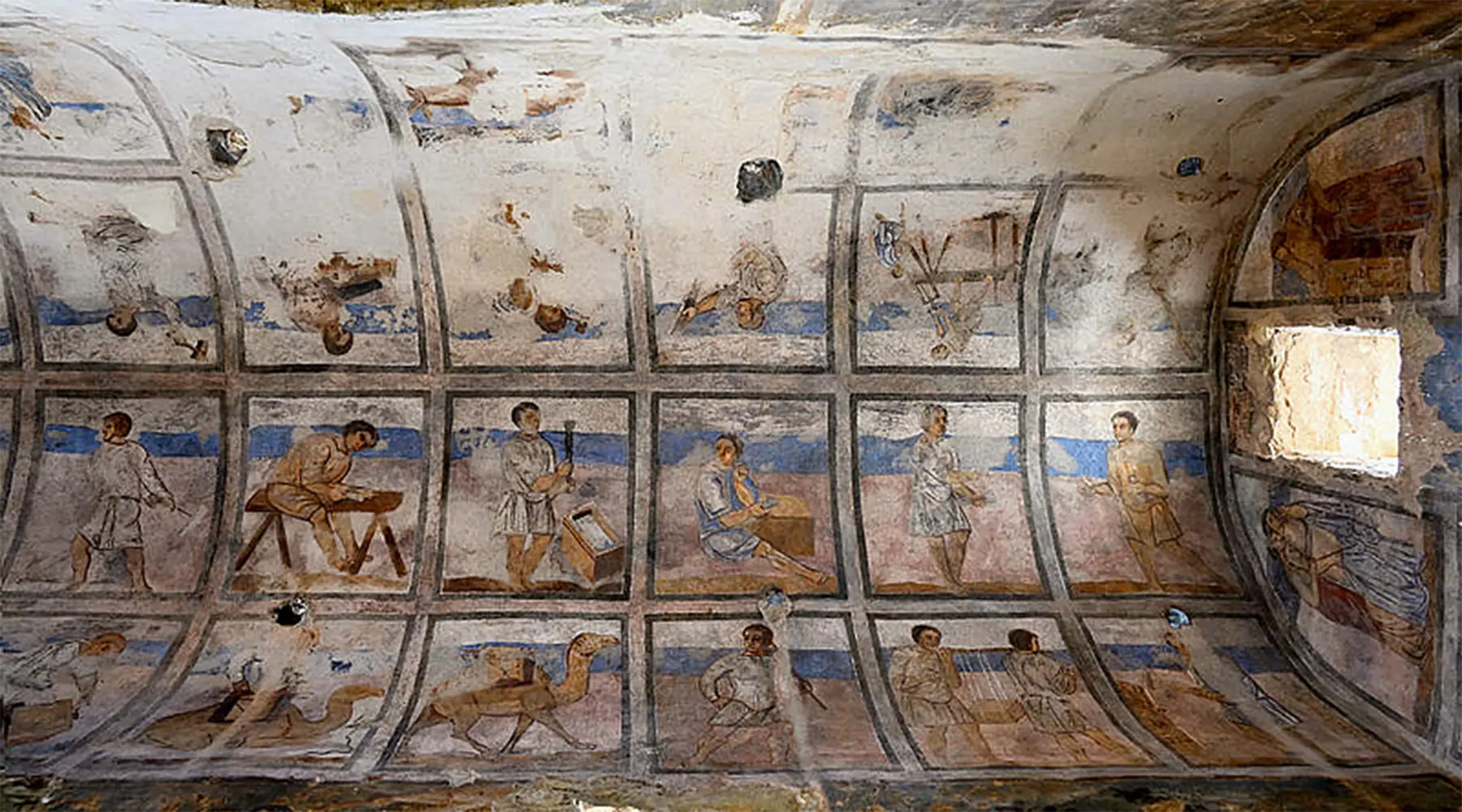
What those buildings contained, however, goes far beyond politics. Quseir Amra, built around 711 CE and today a UNESCO World Heritage Site, conceals behind its modest desert exterior one of the most extraordinary artistic programs of the early medieval world. Its interior walls and ceilings are covered in frescoes depicting hunting scenes, athletic contests, bathing figures, and allegories of power – including a remarkable panel showing six kings defeated by the Islamic state, their names written in both Arabic and Greek. Most astonishing of all is the painted dome of the bathhouse, which depicts the night sky with 35 identifiable constellations – believed to be the oldest surviving representation of the celestial sphere on a curved surface in the world. The Umayyads were not hiding in the desert. They were announcing themselves to it.
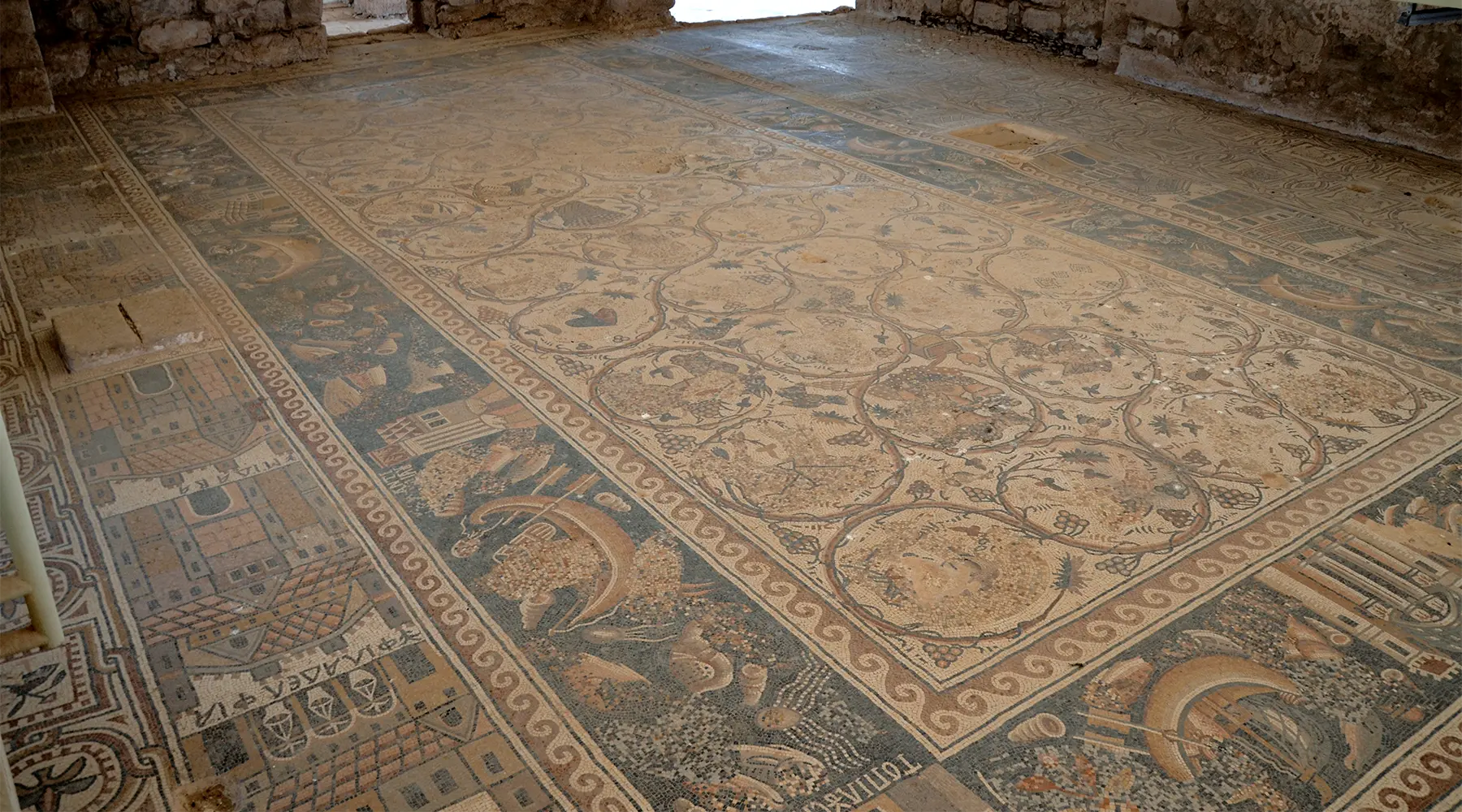
Yet perhaps the most eloquent testament to the Umayyad period in Jordan is not found in its palaces or mosques, but in its churches. Some of the most spectacular Christian mosaic floors ever created were laid during this era – including the extraordinary mosaics of Umm er-Rasas, a UNESCO World Heritage Site whose Church of Saint Stephen contains one of the largest and most intricately preserved Byzantine-Umayyad mosaic floors in existence, its borders depicting towns and cities of the Nile Delta, the Holy Land, and Jordan in astonishing detail. That such masterpieces of Christian art were created under Islamic rule – funded, protected, and celebrated within a Muslim-governed state – speaks more powerfully than any political declaration about the nature of the society the Umayyads built in Jordan. This was not tolerance as a policy imposed from above; it was coexistence as a lived reality, woven into the very floors of its churches
The Umayyad period also brought practical investment to Jordan’s urban centers. Mosques were built in Jerash, Amman, and across the region. Jerash and Amman became mints striking copper coins for the Islamic economy. Water systems were expanded and new pools constructed along the Hajj route to serve the thousands of pilgrims passing through annually. Jordan was not a peripheral province under the Umayyads – it was a living part of the caliphate’s core, and the evidence of that engagement is still standing in the desert today.
The Abbasid, Tulunid, and Fatimid Periods (750 - 1115 CE)
The revolution that ended Umayyad rule in 750 CE was itself plotted on Jordanian soil. The Abbasid family had quietly settled in al-Humayma, a small town in southern Jordan along the ancient Nabataean road, using its remote location – close enough to Damascus to monitor developments, far enough to escape suspicion – as the headquarters for their clandestine movement. Three future Abbasid caliphs were born there, and it was from al-Humayma that the call to revolution was sent eastward to Khorasan. The site today preserves ruins of a Nabataean water system, an Umayyad palace, and one of the oldest surviving mosques in Jordan – layers of history compressed into a single modest hillside.
When the Abbasids moved their capital to Baghdad, Jordan shifted from the heart of the caliphate to its western frontier. The desert castles fell into disrepair, urban life contracted, and the region settled into a long quietude – valued for its agricultural output and its position on the Hajj route but no longer the center of political attention it had been. The Tulunid dynasty of Egypt briefly extended its control over the Levant in the late 9th century, followed by the Fatimids in 969 CE. Under Fatimid rule, Aqaba – ancient Ayla – experienced a notable revival, flourishing as a busy commercial port with markets, residences, and fortified walls, its merchants trading as far as China. It was a reminder that even in quieter centuries, Jordan’s position at the crossroads of the world ensured it was never entirely still.
The Crusaders and the Ayyubid Response (1115 - 1250 CE)
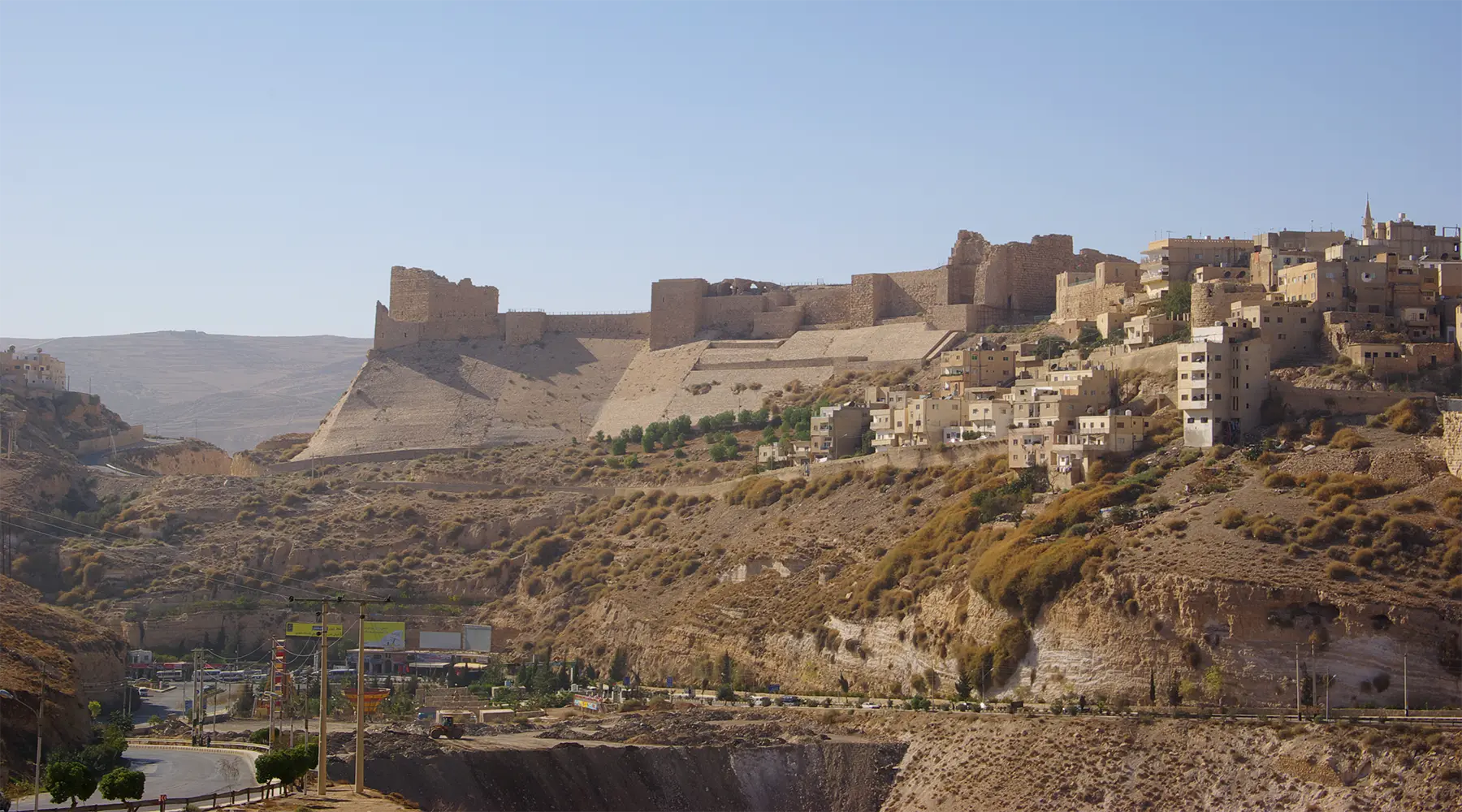
When the Crusaders established their Kingdom of Jerusalem in 1099 CE, they quickly understood what every empire before them had known: whoever controls the highlands of Transjordan controls the King’s Highway, the Hajj routes, and the commercial arteries connecting Egypt, Arabia, and Syria. In 1115 CE, Baldwin I pushed east into Jordan and seized the strategic hilltop at Shobak, building his castle there and naming it Montreal. Within a year he had driven south to Aqaba, securing the Red Sea routes as well. Two decades later, the fortress at Karak rose on its spectacular promontory above the Dead Sea valley – one of the most formidable military structures of the medieval world, commanding the King’s Highway and the surrounding landscape for miles in every direction.
For over a century the Crusaders held Transjordan, extracting wealth from the trade routes and agricultural lands beneath their castles. But their presence generated its own undoing. The lord of Karak, Raynald of Chatillon, used the castle as a base for raids against Muslim pilgrims and merchants traveling the King’s Highway – provocations so relentless and so personal that they made a military response not merely inevitable but imperative.
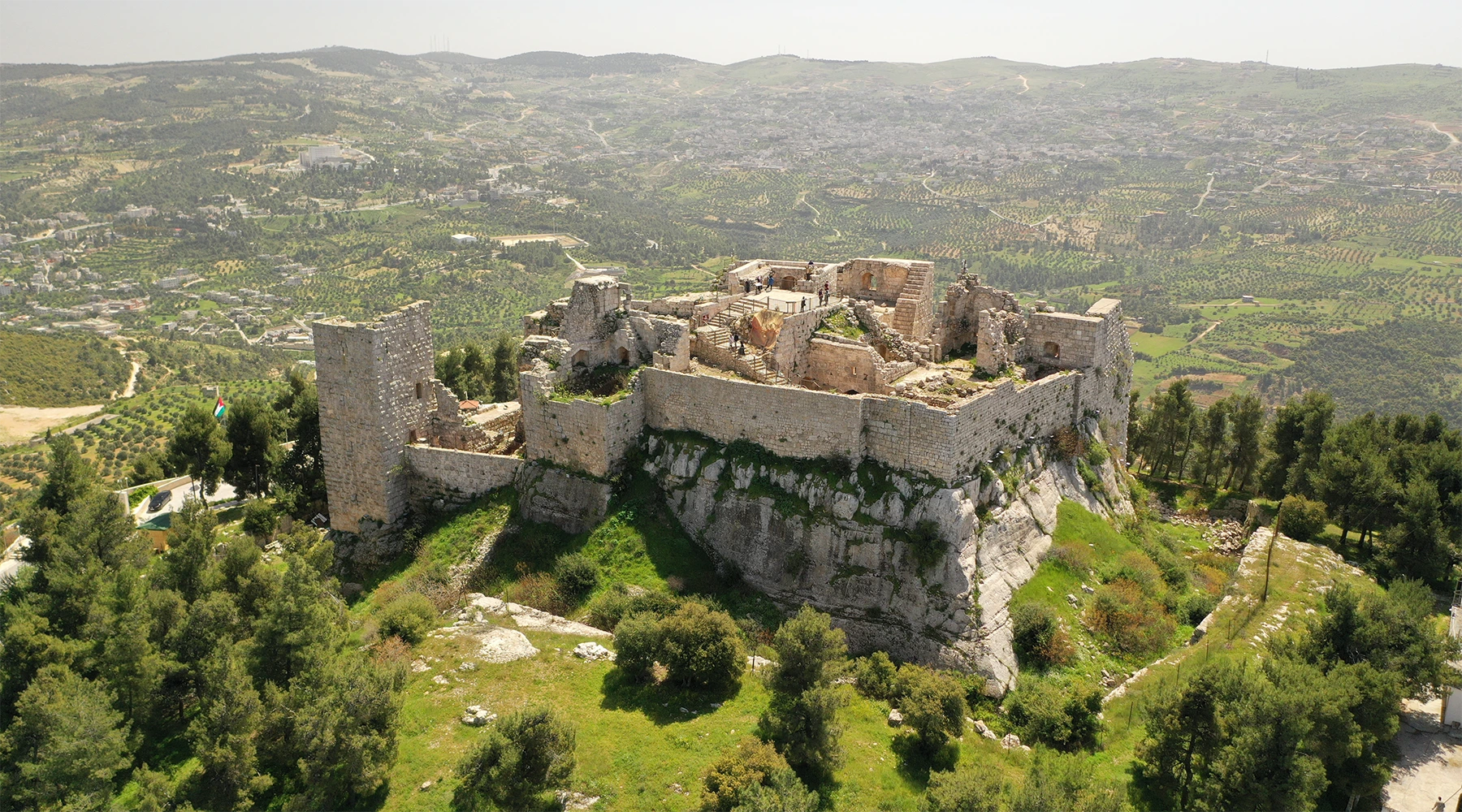
The response came from Saladin – Salah ad-Din Yusuf ibn Ayyub – who had united Egypt and Syria under his rule and was systematically dismantling Crusader power across the Levant. In 1184 CE he ordered the construction of Ajloun Castle in northern Jordan, positioned on a forested hilltop to overlook the Jordan Valley, cut Crusader communications, and protect the road to Damascus. Three years later, his victory at the Battle of Hattin in 1187 CE shattered the Crusader Kingdom. Jerusalem was liberated. Karak and Shobak surrendered to Muslim forces shortly after. It was one of the most complete reversals of fortune in medieval military history, and Jordan’s castles – built by the Crusaders to dominate the region – became the instruments of their own defeat.
The brief Ayyubid Emirate of Karak, established in 1229 CE under the prince al-Nasir Dawud, is one of the more remarkable and underappreciated episodes in Jordan’s history. Controlling all of modern Jordan’s territory plus Nablus, Jerusalem, and Hebron, with Karak as its capital, the emirate was no mere provincial outpost – it was an independent power that held the balance between Cairo and Damascus. It even succeeded in liberating Jerusalem from renewed Crusader occupation in 1239 CE, a fact rarely noted in Western histories of the period. Jordan, for a brief and brilliant moment, was not a province of someone else’s empire. It was an empire in its own right.
The Mamluk Sultanate (1250 - 1516 CE)
The Mamluks who swept to power in Egypt and Syria understood Jordan’s strategic value with exceptional clarity. Facing the existential threat of the Mongol armies advancing from the east – the same forces that had sacked Baghdad in 1258 CE and extinguished the Abbasid Caliphate – they recognized that Jordan was not merely a province to be administered but a shield to be fortified. The Sultan Baybars, one of the most formidable military minds of the medieval world, made Jordan a personal priority.
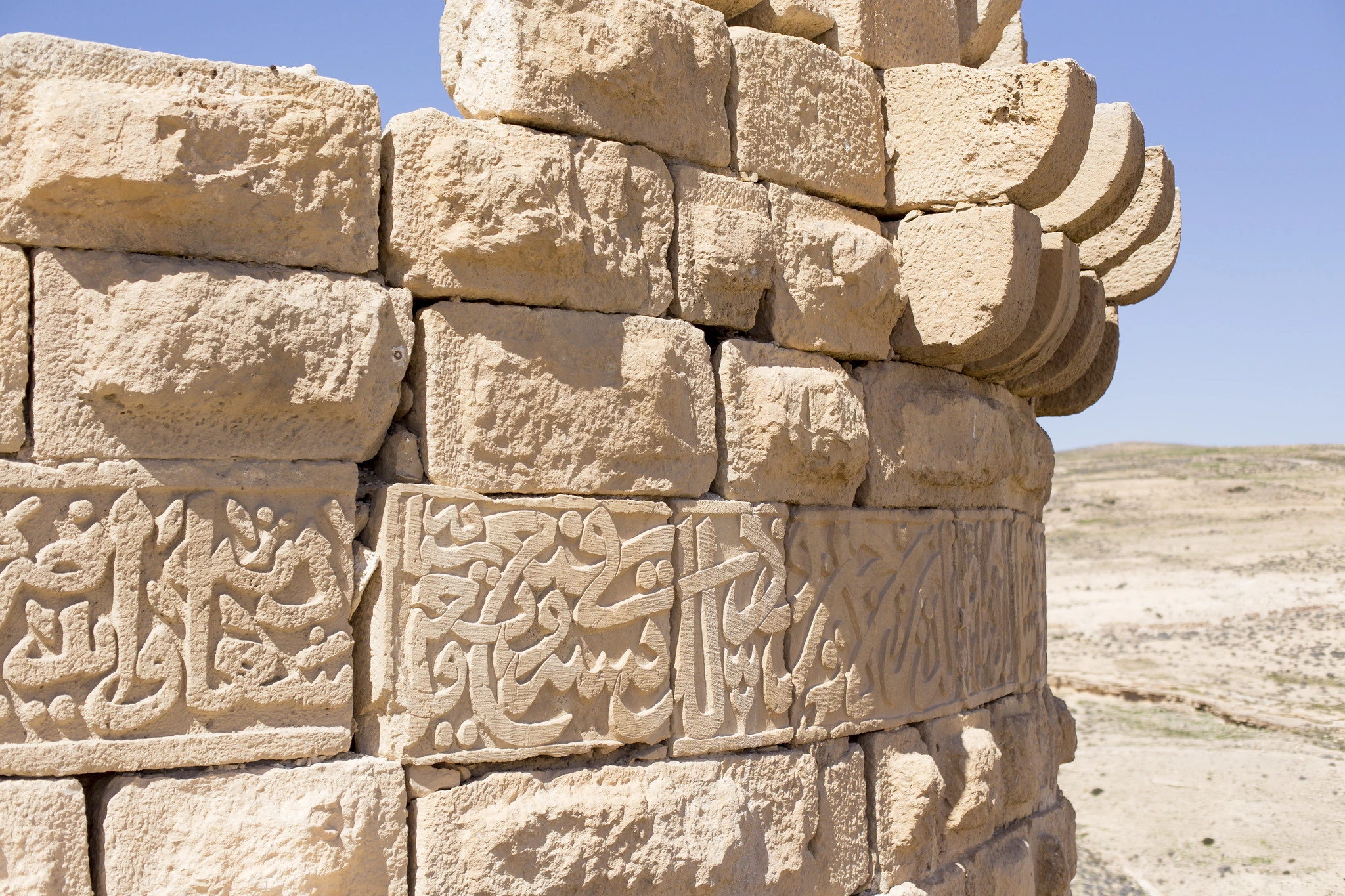
Every major castle in the country was repaired, strengthened, and garrisoned. At Karak, Baybars demolished the southern tower and rebuilt it to a greater height and strength – it still bears his name today as Burj al-Zahir, the tallest and most imposing tower in the complex, its inscription confirming its builder, its carved lion above the entrance the personal emblem of a sultan who had defeated both Crusaders and Mongols in the same decade. Shobak, Ajloun, and Salt received the same attention – transformed from Crusader and Ayyubid fortifications into a coordinated defensive network capable of stopping the Mongol advance and protecting the roads to Egypt and the Hijaz.
Jordan also supplied something strategically indispensable: the eastern shores of the Dead Sea yielded abundant sulfur and bitumen – the essential components of the era’s most feared weapon – giving the Mamluk war machine a material advantage rooted literally in Jordanian soil.
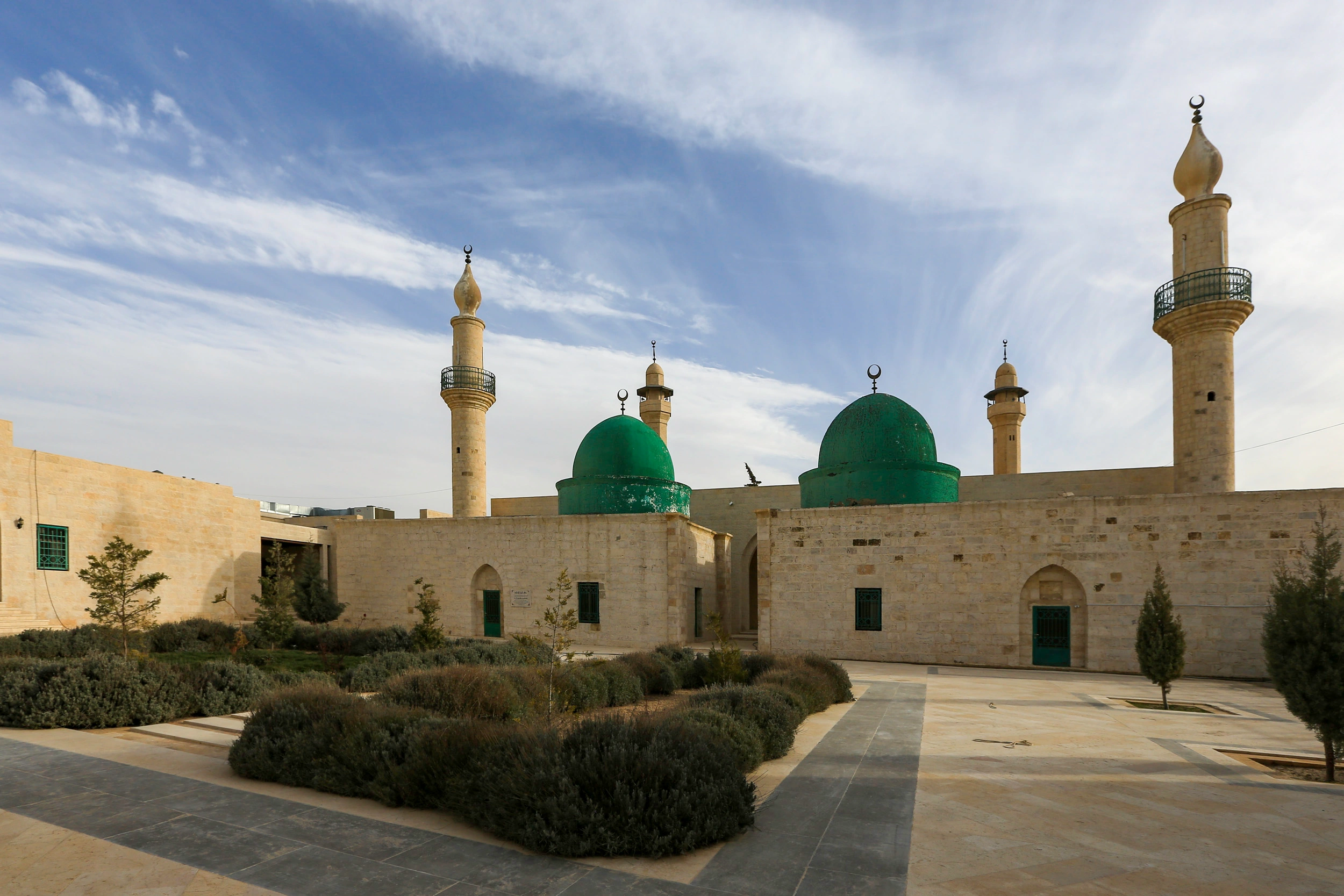
Beyond the military, the Mamluks invested in Jordan’s religious and civic life. Baybars restored and endowed mosques and shrines across the country. The administrative division of Jordan into three provinces – the niyabas of Karak, Ajloun, and Balqa – gave the region a coherent governance structure that would outlast the Mamluk dynasty itself. Trade revived along the King’s Highway, pilgrimage routes were secured, and Jordan’s towns experienced a modest but genuine urban renewal after the disruptions of the Crusader and Mongol periods.
The Mamluk period closed dramatically. The Ayyubid prince al-Nasir Ahmad, who had made Karak his personal residence and filled its vaults with his treasury and arsenal, attempted to shift the center of Mamluk power from Cairo to Karak in 1342 CE – a bold move that cost him his throne and his life when the Cairo-based Mamluk amirs besieged the castle and deposed him. It was a final reminder that Jordan’s castles, for all their strength, were never truly beyond the reach of the powers that built them. In 1516 CE, the Ottoman Sultan Selim I defeated the Mamluk armies at Marj Dabiq north of Aleppo, and Jordan passed, once again, into new hands.
The Ottoman Period (1516 - 1918 CE)
When the Ottoman Sultan Selim I defeated the Mamluk armies at Marj Dabiq in 1516 CE, Jordan passed into the Ottoman Empire almost without resistance – and remained there for four centuries. For much of that time it was a quiet, thinly populated corner of a vast imperial system, governed indirectly through local tribal leaders and family dynasties who maintained order, collected taxes, protected the Hajj caravan, and kept the roads open – so long as they remained loyal to Istanbul. Ottoman officials appeared seasonally: for the Hajj, for tax collection, for military recruitment. Between those visits, Jordan largely governed itself.
This arrangement produced a paradox familiar to anyone who has studied Jordan’s long history: neglect and resilience existing side by side. The great Umayyad palaces crumbled further into the desert. The Decapolis cities slept beneath their accumulating dust. Population fell, settlements contracted, and much of the landscape returned to the rhythms of nomadic and semi-nomadic tribal life that had shaped it long before any empire arrived. Yet the land endured. The King’s Highway remained a living road. The Hajj route through Transjordan continued to pulse with pilgrims every year. And Jordan’s tribes maintained a social order of their own that no distant capital could easily disrupt.
The most transformative Ottoman intervention came not in the 16th century but the 19th, when the empire began extending its administrative reach into Jordan in earnest – establishing new districts at Irbid, Salt, and Karak, and bringing with them schools, courts, and a new relationship between the state and its people that not everyone welcomed.
The most visible Ottoman legacy in Jordan today is the Hejaz Railway – the ambitious project ordered by Sultan Abdulhamid II in 1900 CE to connect Damascus with the holy cities of Mecca and Medina by rail. Crossing Jordan from north to south through some of the most challenging terrain in the region, the railway transformed isolated highland communities almost overnight – bringing not just trains but telegraph lines, post offices, and a new connectivity to the wider world. The first train reached Medina in August 1908. The stations it left behind – at Amman, Ma’an, Mudawwara, and dozens of points between – are still standing, their Ottoman stone architecture a quiet monument to an empire’s final great infrastructure project on Jordanian soil.
The Ottoman era ended as dramatically as it had begun. The Great Arab Revolt, launched by Sharif Hussein bin Ali of Mecca in June 1916, found some of its most committed fighters among Jordan’s tribal leaders and communities. The campaign that liberated Aqaba in 1917 shifted the entire balance of the Arab campaigns in the First World War, and Jordan’s people destroyed bridges, derailed trains, tore up thousands of railway sleepers, and demolished dozens of bridges along the Hejaz Railway, crippling Ottoman supply lines with devastating effectiveness. By September 1918, the Arab forces had swept north through Jordan into Syria, liberating Damascus and bringing four centuries of Ottoman rule to its close.
Modern Jordan: The Hashemite Kingdom (1921 - Present)
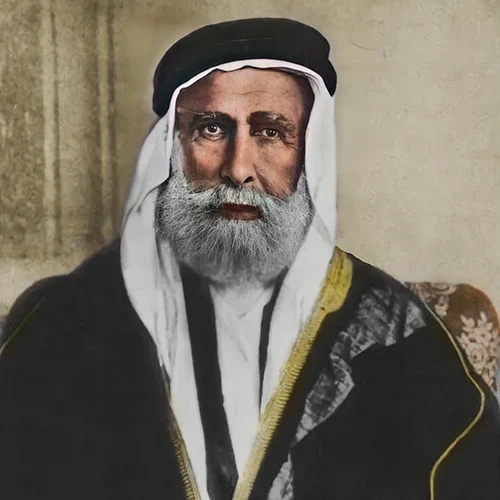
When the Arab forces swept north through Jordan in the autumn of 1918 and the Ottoman centuries finally closed, the land that would become modern Jordan stood at a crossroads without a map. The Sykes-Picot Agreement had already carved the region into spheres of European influence, the promises made to Sharif Hussein bin Ali during the Great Arab Revolt were being quietly set aside, and the political geography of the Middle East was being redrawn by powers sitting in London and Paris rather than in the cities they were redrawing it for.
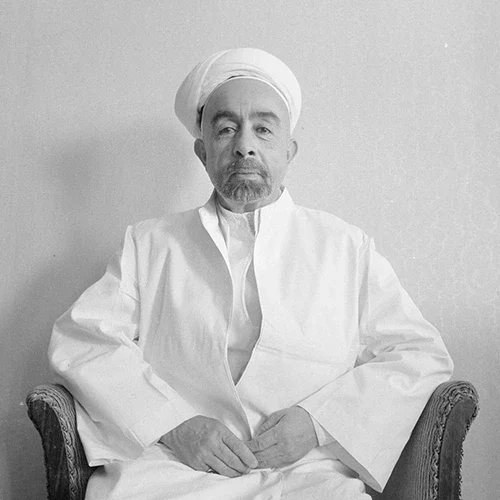
Into this uncertainty came Emir Abdullah ibn Hussein – second son of Sharif Hussein, veteran of the Arab Revolt, and a man of uncommon political intelligence. In 1921, the British recognized him as ruler of the newly defined territory of Transjordan, and in that recognition the foundations of modern Jordan were laid. What followed was not the fulfillment of the grand Arab state the Revolt had promised – it was something smaller, more specific, and ultimately more durable: a kingdom built not on the vast aspirations of pan-Arabism but on the particular character of its land, its people, and the pragmatic wisdom of its founding ruler.
In 1946, the Hashemite Kingdom of Jordan was formally proclaimed as an independent sovereign state, with Abdullah I as its first king. His reign was defined by a gift for navigating impossible terrain – diplomatic, political, and geographical – and by a vision of Jordan as a place where Arab identity, Islamic values, and the complex realities of the modern Middle East could coexist without contradiction. He was assassinated at the Al-Aqsa Mosque in Jerusalem in 1951, but the state he had built was solid enough to survive the shock.
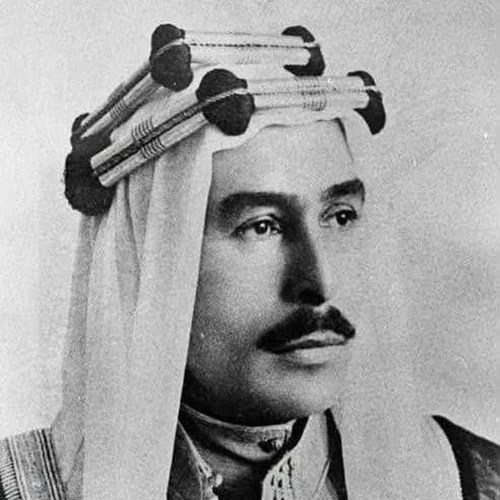
His son King Talal, though his reign lasted barely a year due to illness, left a legacy disproportionate to its brevity. The Jordanian Constitution of 1952 – drafted and ratified under his watch – established a framework of governance that balanced royal authority with parliamentary representation, guaranteed the rights of citizens regardless of religion or origin, and made primary education both compulsory and free. It remains, in its essential architecture, the constitutional foundation of the kingdom today.
The forty-seven years of King Hussein ibn Talal’s reign (1952-1999) are the years that shaped modern Jordan in the deepest sense. He came to the throne as a teenager and governed through some of the most turbulent decades the Middle East has ever known – wars, displacement, regional upheaval, and the constant, grinding pressure of a kingdom surrounded by conflict on every side. What he built in those conditions was remarkable: a state with a professional army, expanding educational institutions, and a reputation for stability that made Jordan a refuge for successive waves of people fleeing catastrophe elsewhere.
The Battle of Karameh in March 1968 – fought in the Jordan Valley after Israeli forces crossed the border in strength – became one of the defining moments of his reign. The Jordanian Army, outgunned and outnumbered, stood its ground in a fifteen-hour engagement that ended with the Israeli forces withdrawing having suffered significant losses. Karameh – the Arabic word for dignity – gave its name to a battle that restored Arab confidence after the devastating defeat of 1967, and the event’s significance resonated far beyond the battlefield.
In 1994, King Hussein signed the Wadi Araba Peace Treaty, which formally recognized Jordan’s historic custodianship of the Islamic and Christian holy sites in Jerusalem – a role the Hashemite family continues to hold and guard with deep seriousness to this day.
King Hussein died in February 1999, his funeral attended by forty heads of state – a measure not of protocol but of genuine respect for a man who had held a small kingdom together through decades that broke larger ones. He was succeeded by his son, King Abdullah II ibn Hussein, under whose reign Jordan has pursued a vision of modernization, economic development, and international engagement while remaining anchored to the values of its Hashemite tradition.
Under King Abdullah II, Jordan joined the World Trade Organization, established the Aqaba Special Economic Zone, expanded its universities and technical institutions, and positioned itself as a regional hub for technology and innovation. The Amman Message of 2004 – a landmark declaration of Islamic values emphasizing tolerance, coexistence, and the rejection of extremism – was issued from Jordan and endorsed by Islamic scholars across the world, establishing the kingdom as a voice of moderation in a region too often defined by its loudest extremes. The United Nations’ adoption of the World Interfaith Harmony Week, proposed by King Abdullah II in 2010, extended that commitment to coexistence onto a global stage.
Jordan today is home to one of the most diverse populations in the region – Jordanians of tribal, Palestinian, Circassian, Chechen, Armenian, Kurdish, and Druze heritage living alongside one of the largest refugee populations in the world, absorbed with a generosity that has strained the country’s resources but never its fundamental hospitality. It is a constitutional monarchy with an elected parliament, an independent judiciary, and a civil society that continues to grow in its engagement and ambition.
Three and a half million years of history have passed through this land – Stone Age toolmakers and Neolithic artists, Nabataean engineers and Roman city-builders, Byzantine mosaic masters and Umayyad caliphs, Crusader knights and Ayyubid sultans, Ottoman administrators and Arab revolutionaries. Each left something behind. Each built, consciously or not, on what came before. And the kingdom that stands today – small in size, vast in heritage, steady in the face of everything history keeps throwing at it – is perhaps the most eloquent proof that Jordan has always known how to endure.
At Eximious Jordan, we believe that history is not something you read about – it is something you walk through, touch, and feel beneath your feet. From the silent statues of ‘Ain Ghazal to the rose-red facades of Petra, from the mosaic floors of Madaba to the desert castles of the Umayyads, every era you have just read about is still there, waiting to be experienced in person. Our bespoke journeys are designed not simply to take you to Jordan’s great sites, but to bring their stories alive – with expert guides who know not just the history, but the light at golden hour over Jerash, the echo of footsteps in the Siq, and the taste of coffee shared with the people who call this extraordinary land home. Jordan’s story spans 3.5 million years. Your journey through it begins with a single conversation.
Explore More Jordan Travel Stories
Jordan Itinerary: How Many Days & Which Journey is Yours
An elegant guide to mapping your time in Jordan. Discover how many days you need and which of our four distinct design philosophies matches your curiosity, from ancient ruins to local heritage.
The Geological Wonders of Jordan: A Journey Through Deep Time
Journey through the geological history of Jordan, from Petra’s rose-red sandstones and Wadi Rum’s deserts to the sunken Dead Sea, discovering landscapes shaped over hundreds of millions of years.
Are You Designing the Perfect Journey Through Jordan? Here’s What You Need to Know
Design the perfect journey through Jordan with expert insight on timing, guides, accommodations, and must-see contrasts. A seamless, meaningful, and immersive experience awaits—crafted with intention, comfort, and unforgettable cultural depth.

Why Jordan Is Hollywood’s Desert Jewel — And Your Next Luxury Escape
Discover Jordan through the lens of cinema, where timeless landscapes meet legendary films — from Dune to Indiana Jones. A journey for discerning travelers seeking beauty, story, and unforgettable luxury in every step.

Jordan: The Best-Kept Secret to Understanding the Middle East
Explore Jordan — the Middle East’s quiet revelation. A land shaped by history, defined by stability, and enriched by diversity, where every step offers insight into the region’s past, present, and enduring spirit.
Where Time and Terrain Transform Every Hour: Exploring Jordan’s Dramatic Contrasts
In Jordan, every hour reveals a new landscape, a different era, and a deeper story. This is a country where time and terrain shift constantly—inviting travelers into a journey of contrast and wonder.
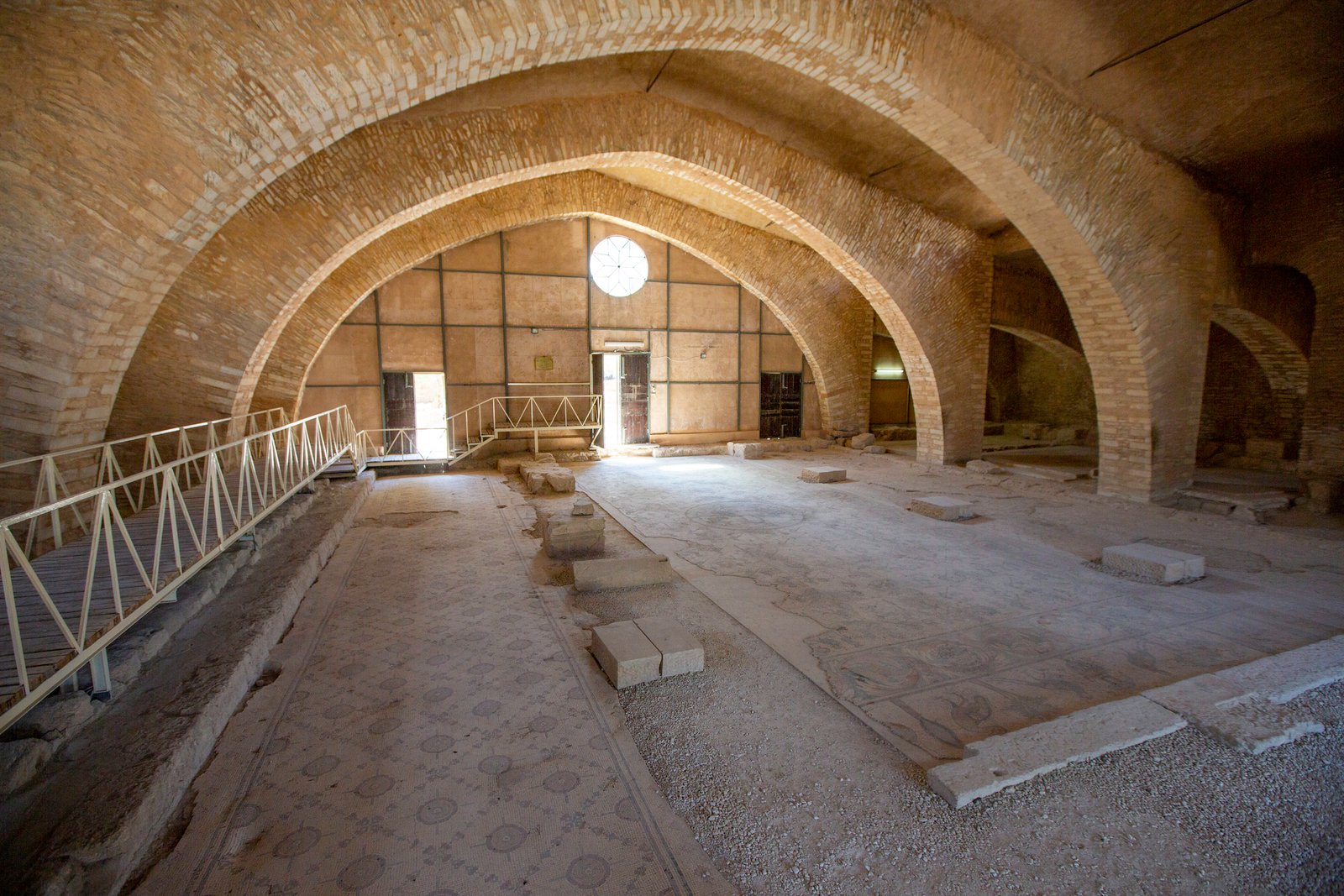
Discover Madaba: The City of Mosaics and Faith
Discover the enchanting city of Madaba, famed for its stunning ancient mosaics and rich spiritual heritage. Explore its vibrant streets, historic churches, and cultural treasures that make Madaba a must-visit destination on your Jordan journey.
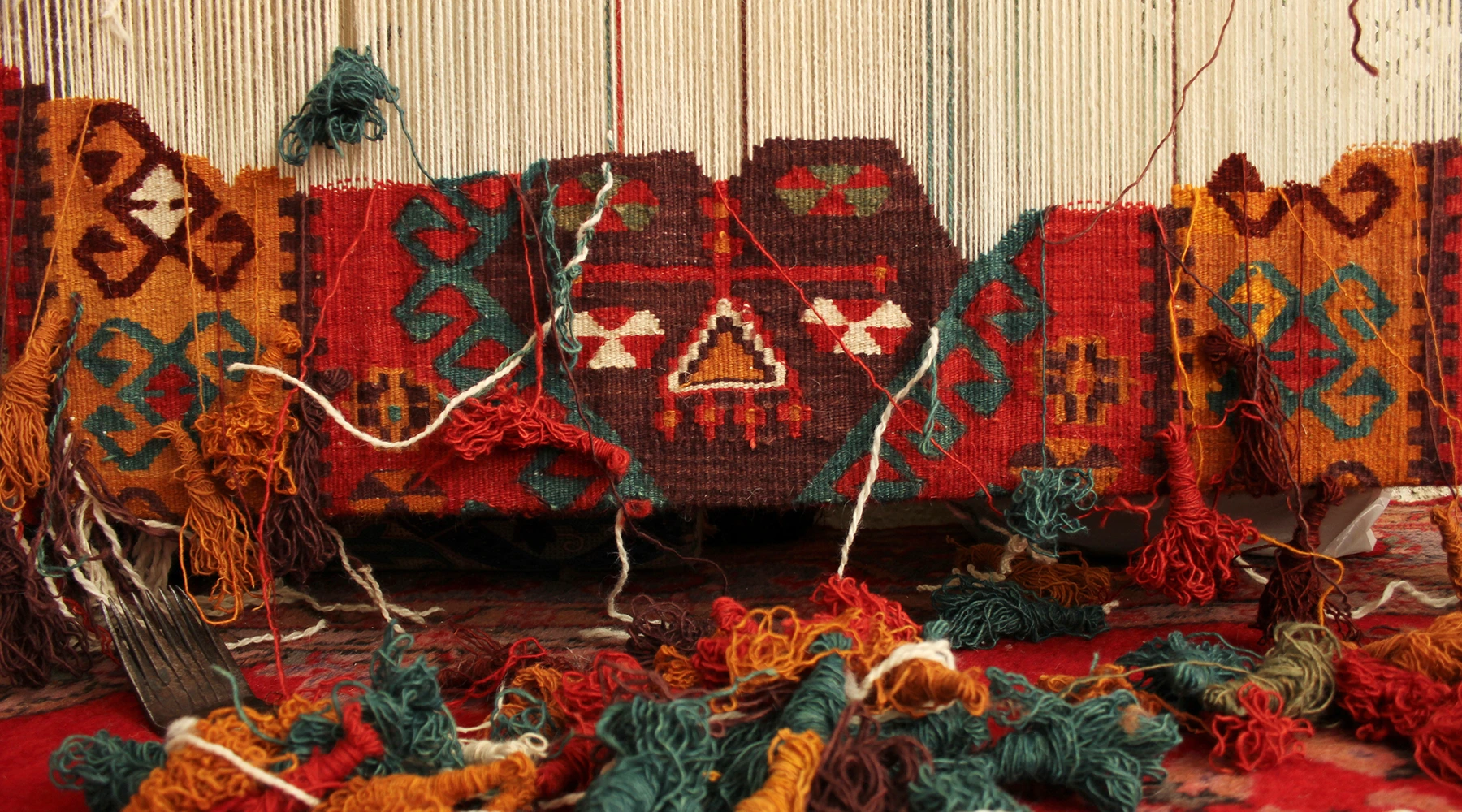
What to Take Home from Jordan: Curated Souvenirs for the Discerning Traveler
From intricate mosaics to luxurious textiles and heirloom jewelry, Jordan offers discerning travelers meaningful souvenirs that embody centuries of craftsmanship, culture, and elegance—lasting treasures that connect you to the kingdom’s timeless artistic soul.
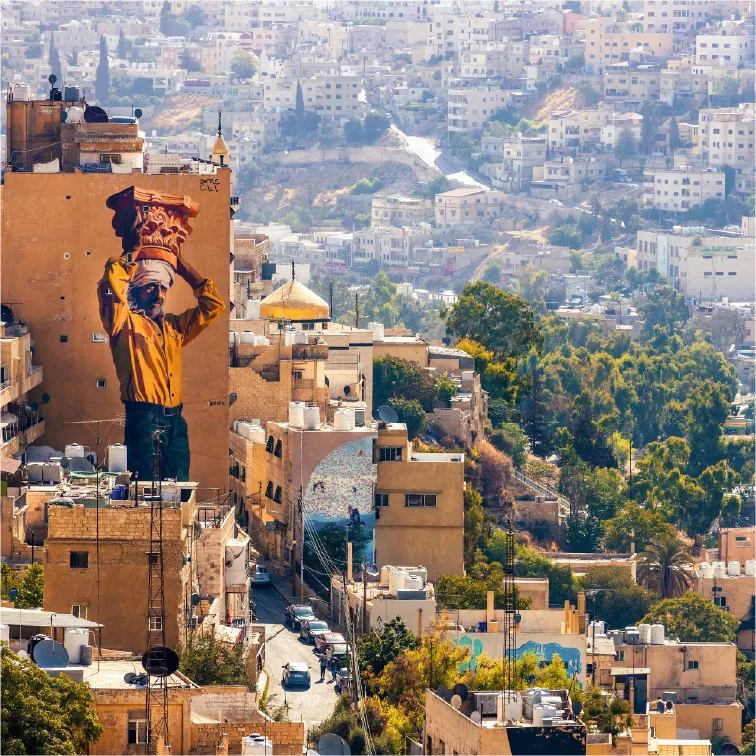
What Amman Adds to Your Journey Through Jordan?
Discover the dynamic capital of Amman, where ancient landmarks meet contemporary culture and diverse communities thrive. Explore its historic sites, vibrant neighborhoods, and rich traditions that make Amman an essential chapter in your journey through Jordan.
Feeling Inspired by Jordan’s Wonders? Let Our Experts Help You Craft Your Perfect Journey
Let us craft an exclusive, bespoke experience tailored just for you. Our travel experts will design a personalized journey through Jordan, perfectly aligned with your unique preferences, style, and desires. Reach out today to begin your journey.