

The Geological Wonders of Jordan: A Journey Through Deep Time
A journey through Jordan, where time is written in stone.
- ByKhaled Basheer
- February 1, 2026
Jordan is a land written in stone. Beyond its legendary cities, deserts, and seas lies a story stretching over half a billion years—a story of oceans advancing and retreating, continents drifting apart, and forces that continue to move beneath the Earth’s surface today.
To travel through Jordan is to traverse deep time itself. From the ancient crystalline foundations in the south to the rose-colored sandstones of Petra and Wadi Rum, from the sunken shores of the Dead Sea to volcanic plains in the north, every landscape tells a story of the planet’s ongoing evolution. Each cliff, canyon, and plateau whispers secrets of a world in constant motion.
Exploring Jordan through this lens allows travelers not only to witness stunning scenery but also to read the history of the Earth itself, turning every journey into a dialogue between human curiosity and geological time.
The Geological Stages That Shaped Jordan
1. Ancient Foundations: Jordanian Crystalline Basement (Precambrian) – Older than ~542 million years
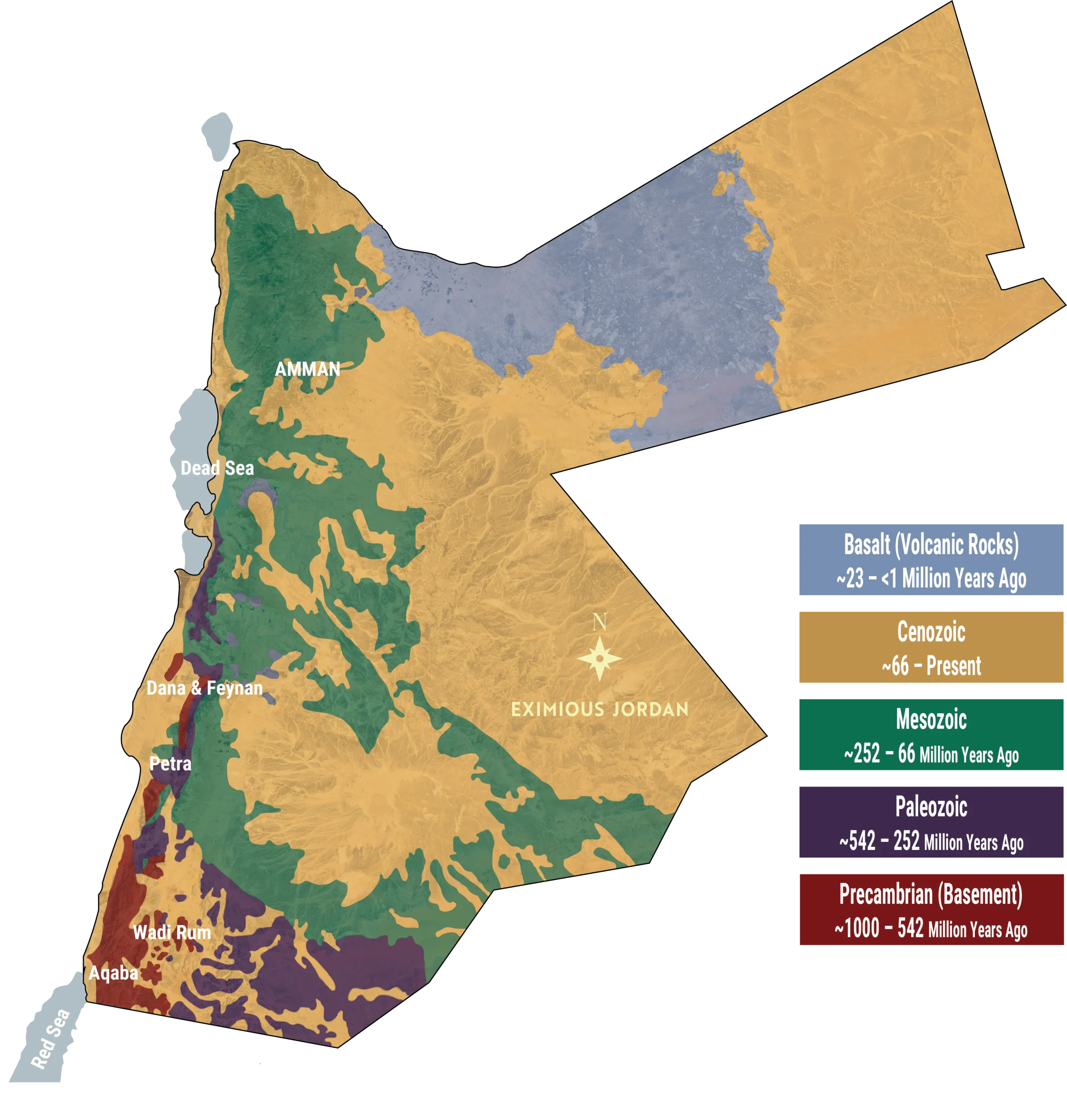
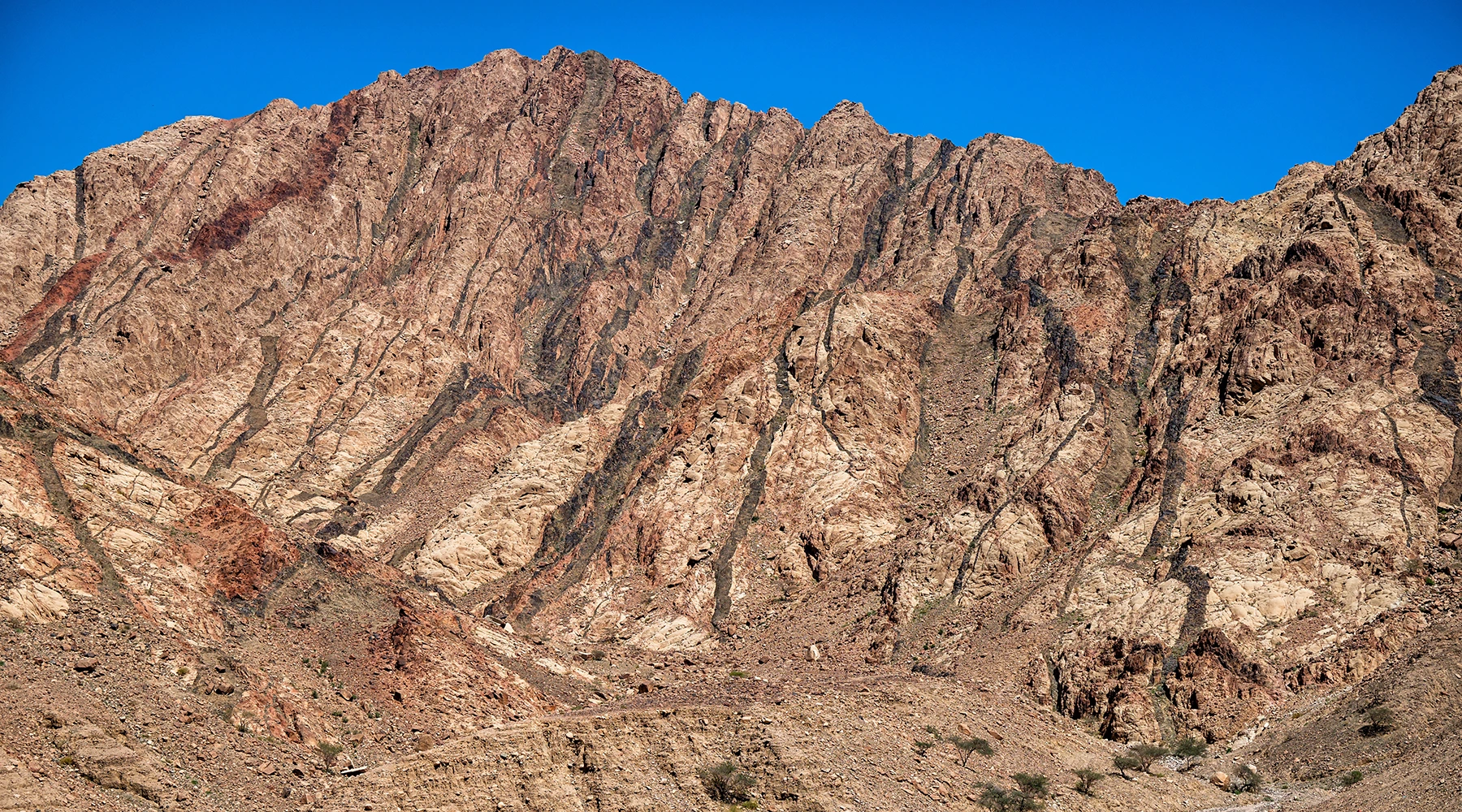
At the base of Jordan’s story lie its oldest rocks—the Jordanian Crystalline Basement. Composed mainly of granite and high-grade metamorphic rocks, these formations belong to the northern edge of the Arabian–Nubian Shield.
Formed over 800 million years ago, these rocks record intense deep-Earth tectonic processes that predate the appearance of complex life. Uplift and erosion gradually smoothed the terrain into a broad, nearly flat surface, forming the foundation for the younger sedimentary layers that would follow.
Today, travelers can witness these primordial rocks around Aqaba and parts of Wadi Rum, standing on surfaces that have endured eons of geological drama. Sunrise casts a golden glow over jagged granite peaks, revealing textures shaped by hundreds of millions of years.
2. Rivers, Deserts, and Shallow Seas: Continental and Early Marine Sedimentation (Paleozoic to part of Mesozoic, ~542–100 million years ago)
Over the next hundreds of millions of years, Jordan’s landscape was molded by rivers, deserts, and intermittent shallow seas. Streams flowing from the south carried sand, silt, and gravel across vast plains, creating thick sandstone deposits. Periodic marine incursions left layers of limestone, marl, and shale, preserving the memory of ancient seas.
Some of Jordan’s most iconic landscapes were born during this stage:
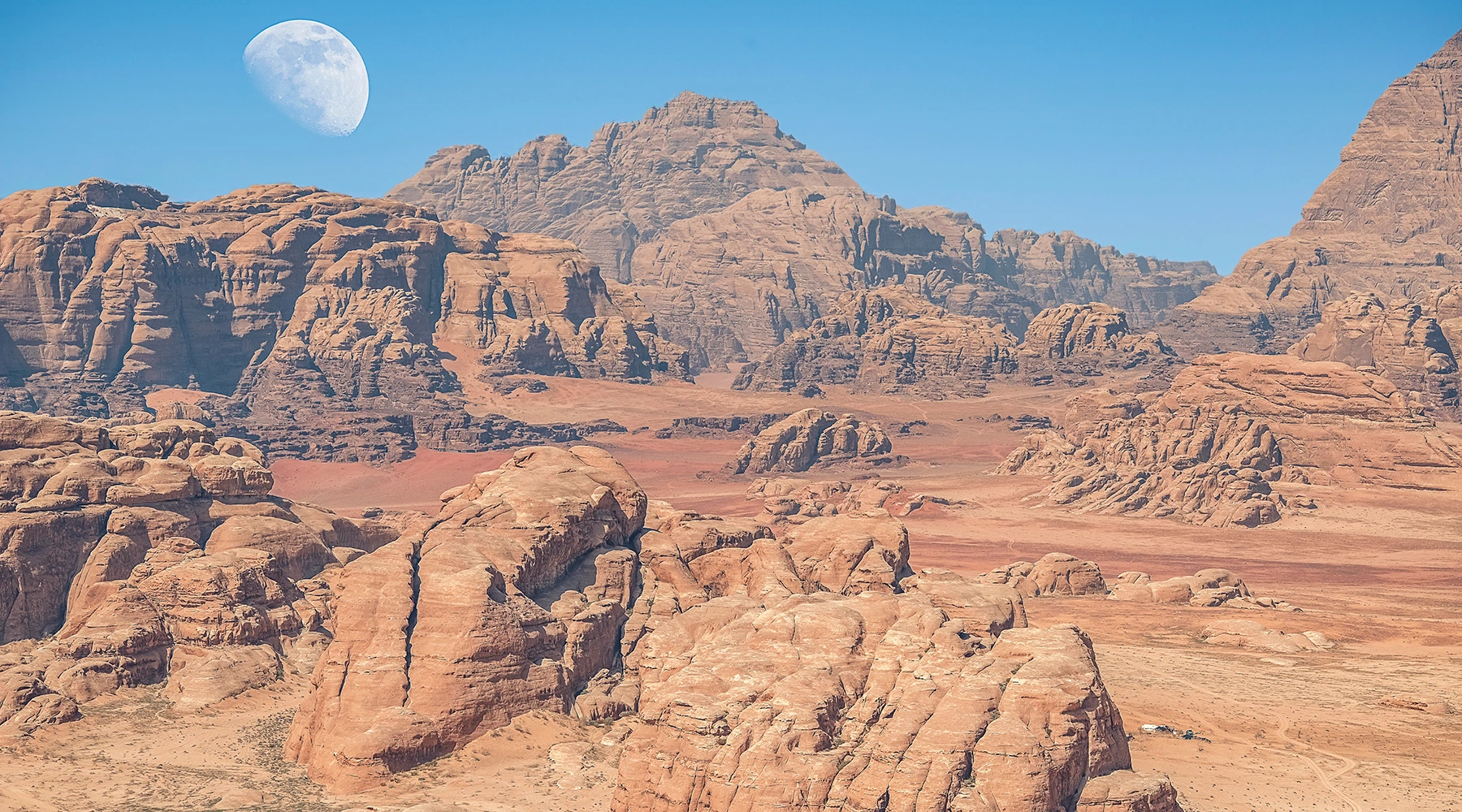
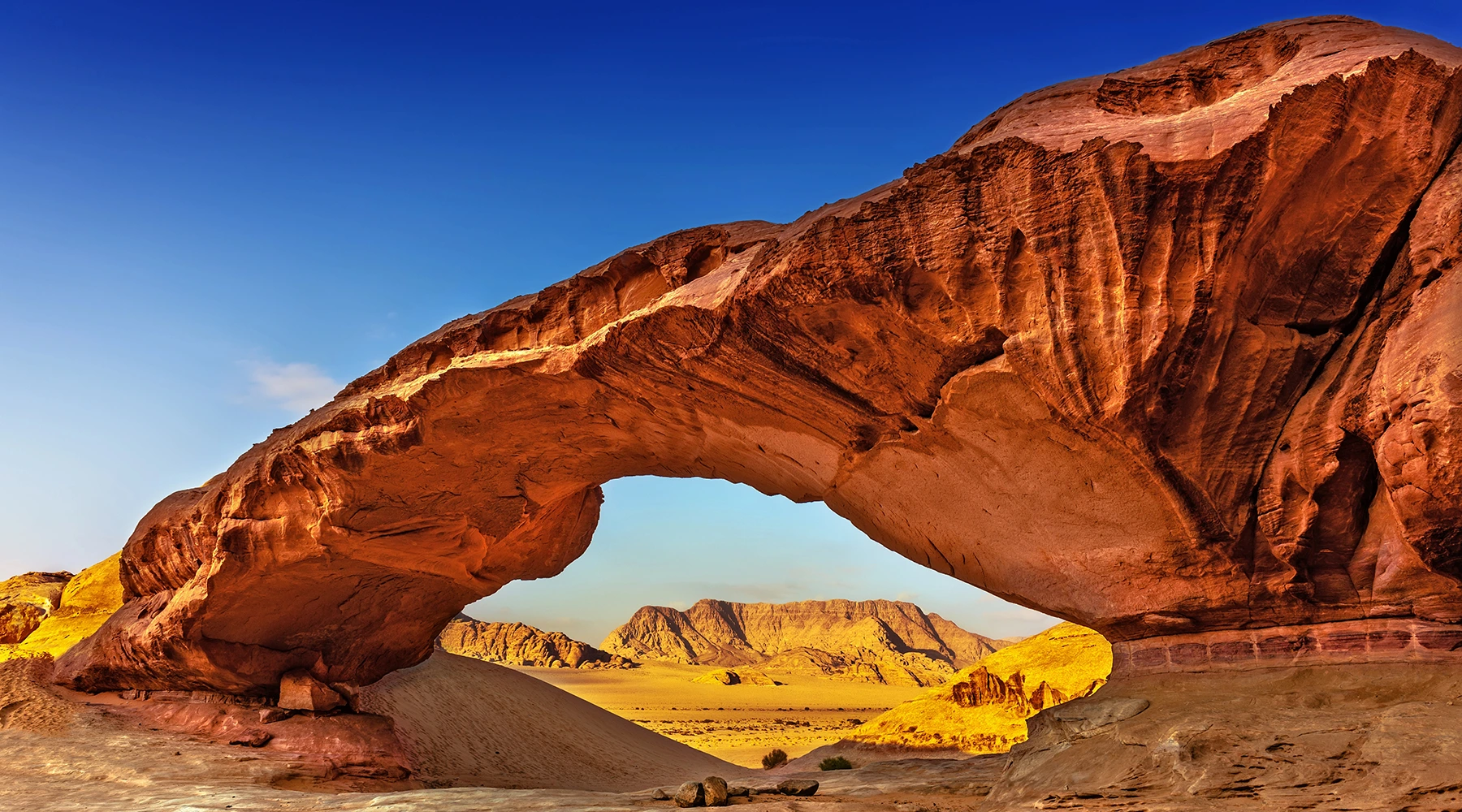
- Wadi Rum: Towering sandstone cliffs and deep valleys carved by rivers and desert winds.
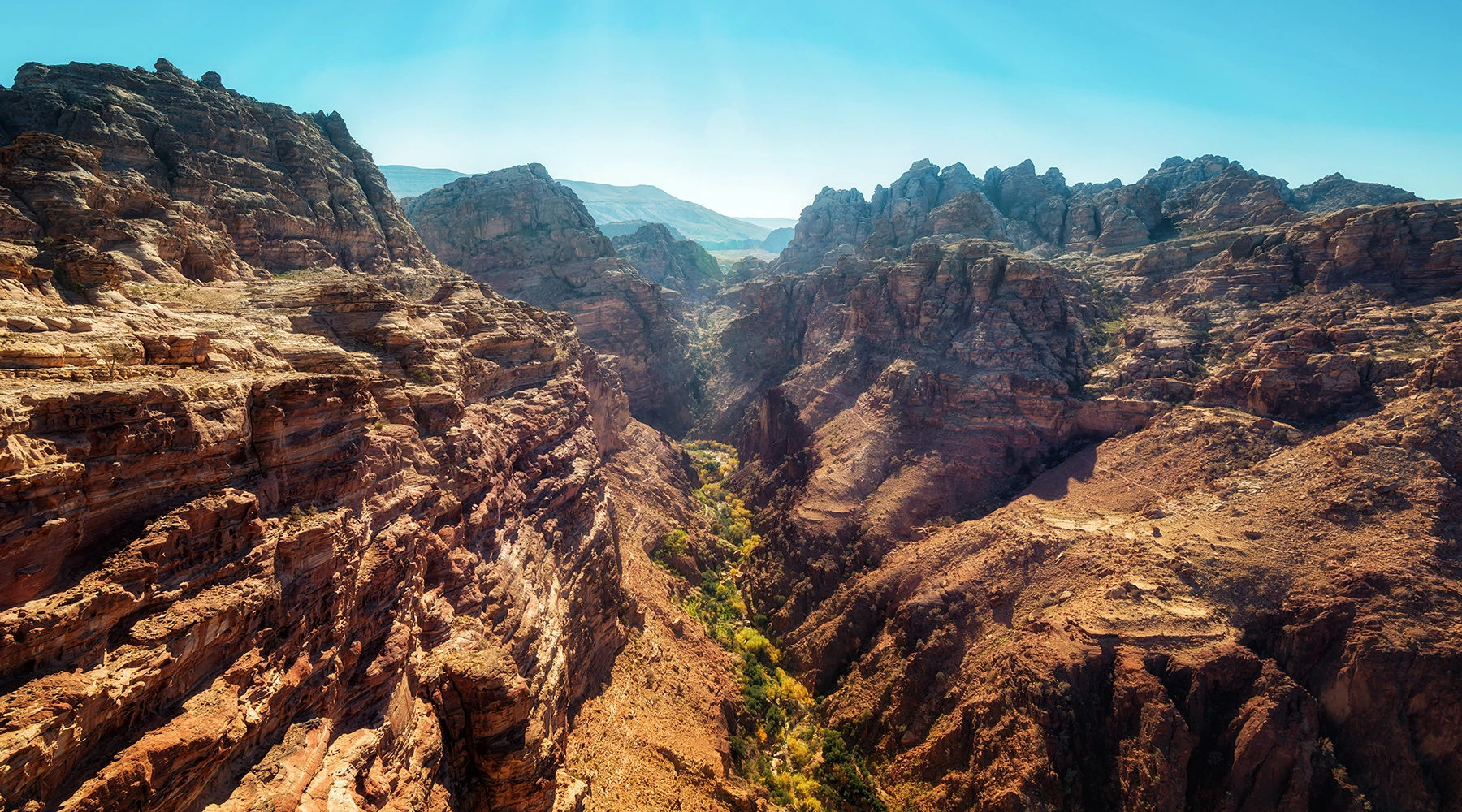
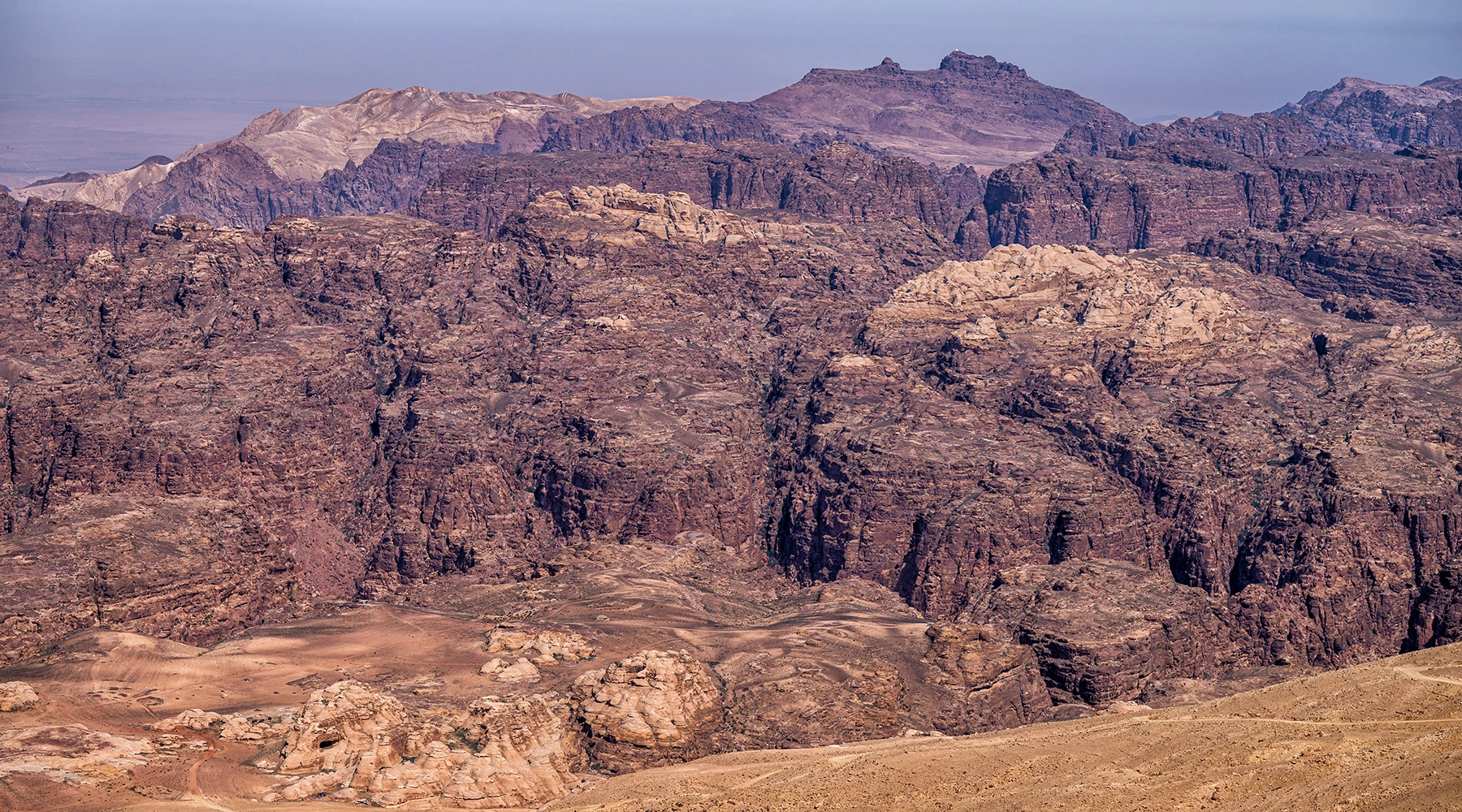
- Petra and Wadi Musa: Rose-colored sandstone layers that reveal cycles of river, desert, and shallow marine environments.
Even ice left its mark. Early Ordovician glaciofluvial deposits hint at times when ice and flowing water shaped the land—a striking contrast to today’s desert landscapes.
Walking through Wadi Rum or Petra is like stepping into a living museum, where every stone and dune holds evidence of ancient forces that shaped both land and human civilization.
When the Sea Returned: Tethys Ocean Transgression (Mesozoic–Cenozoic, ~100–35 million years ago)
Around 100 million years ago, the Tethys Ocean advanced southward, flooding large areas of Jordan. Warm, shallow waters deposited extensive sequences of limestone and marl, forming the backbone of Jordan’s central and northern highlands.
Jordan’s location within nutrient-rich upwelling currents created ideal conditions for phosphate, chert (flint), and oil shale formation, deposits that later became economically important. The limestones from this era now form fossil-rich plateaus, karst landscapes, and cave systems that inspire both scientists and travelers.
These ancient seas also influenced human settlement. Phosphate mining in southern Jordan and limestone use in architecture illustrate how geology directly shaped civilization.
4. A Land in Motion: Formation of the Jordan Rift and Volcanic Landscapes (Cenozoic, <35 million years ago to present)
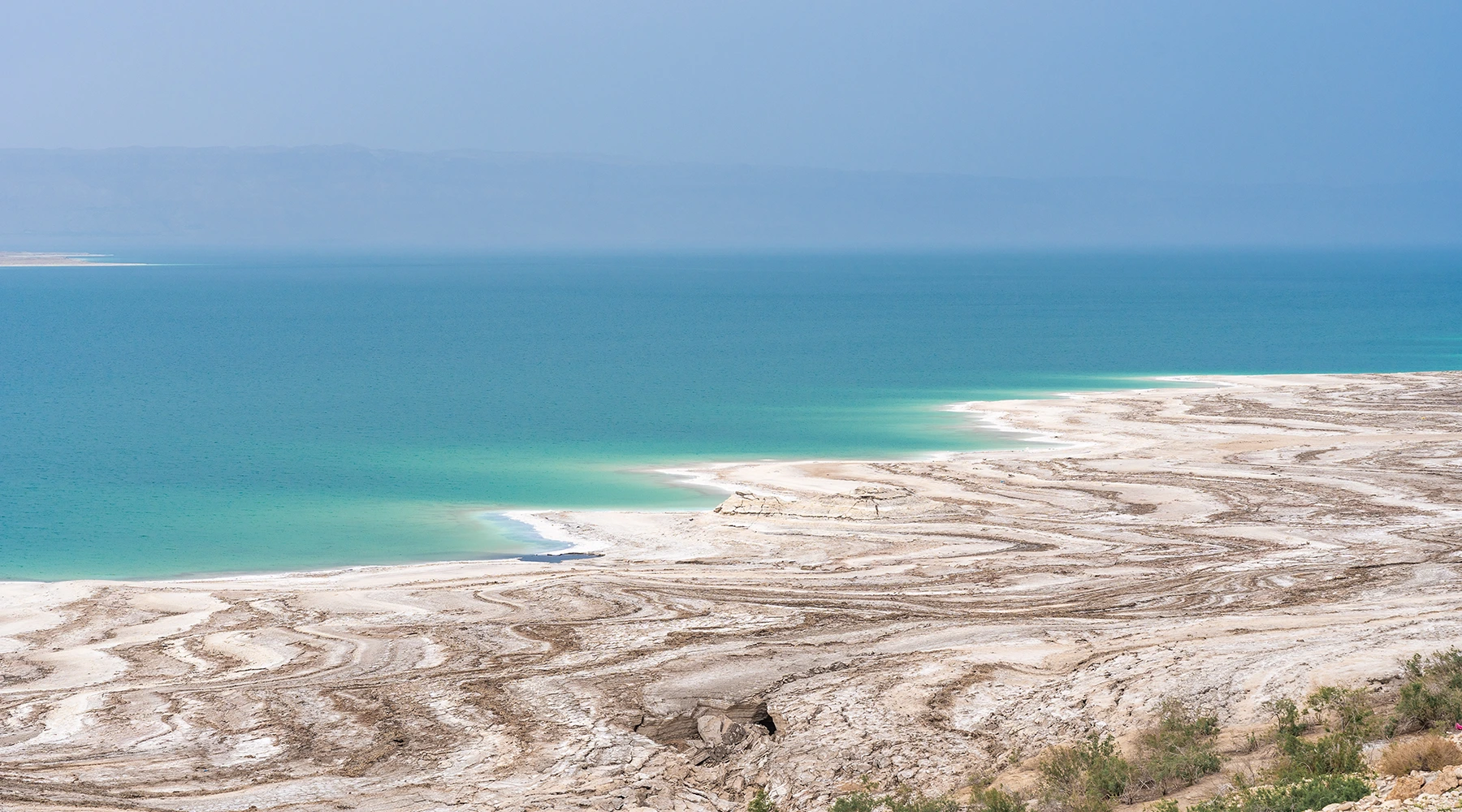
The most dramatic transformations came with the separation of the Arabian Plate from Africa, carving the Red Sea, Gulf of Aqaba, and the Jordan Rift Valley, including the sunken basin of the Dead Sea, the lowest point on Earth.
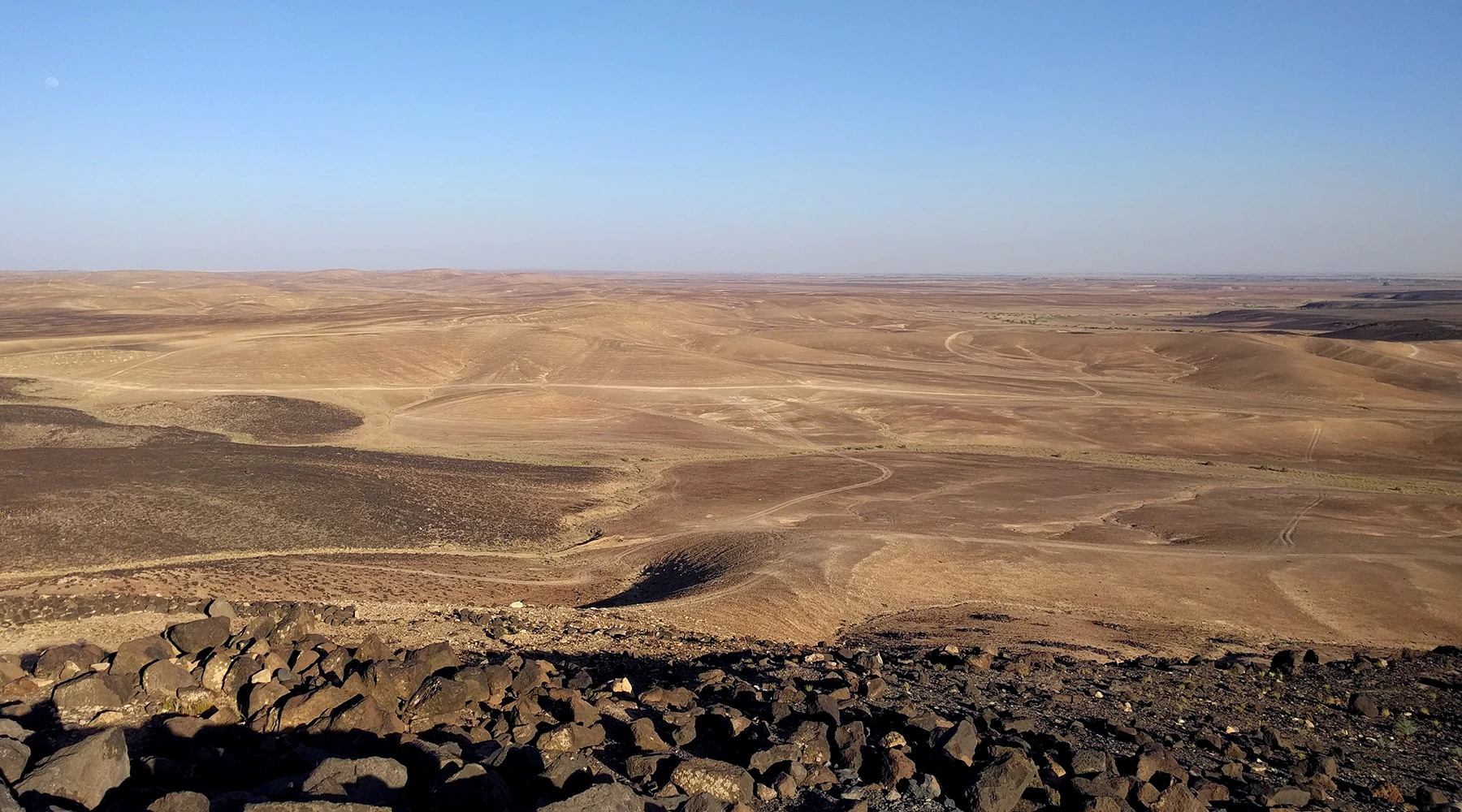
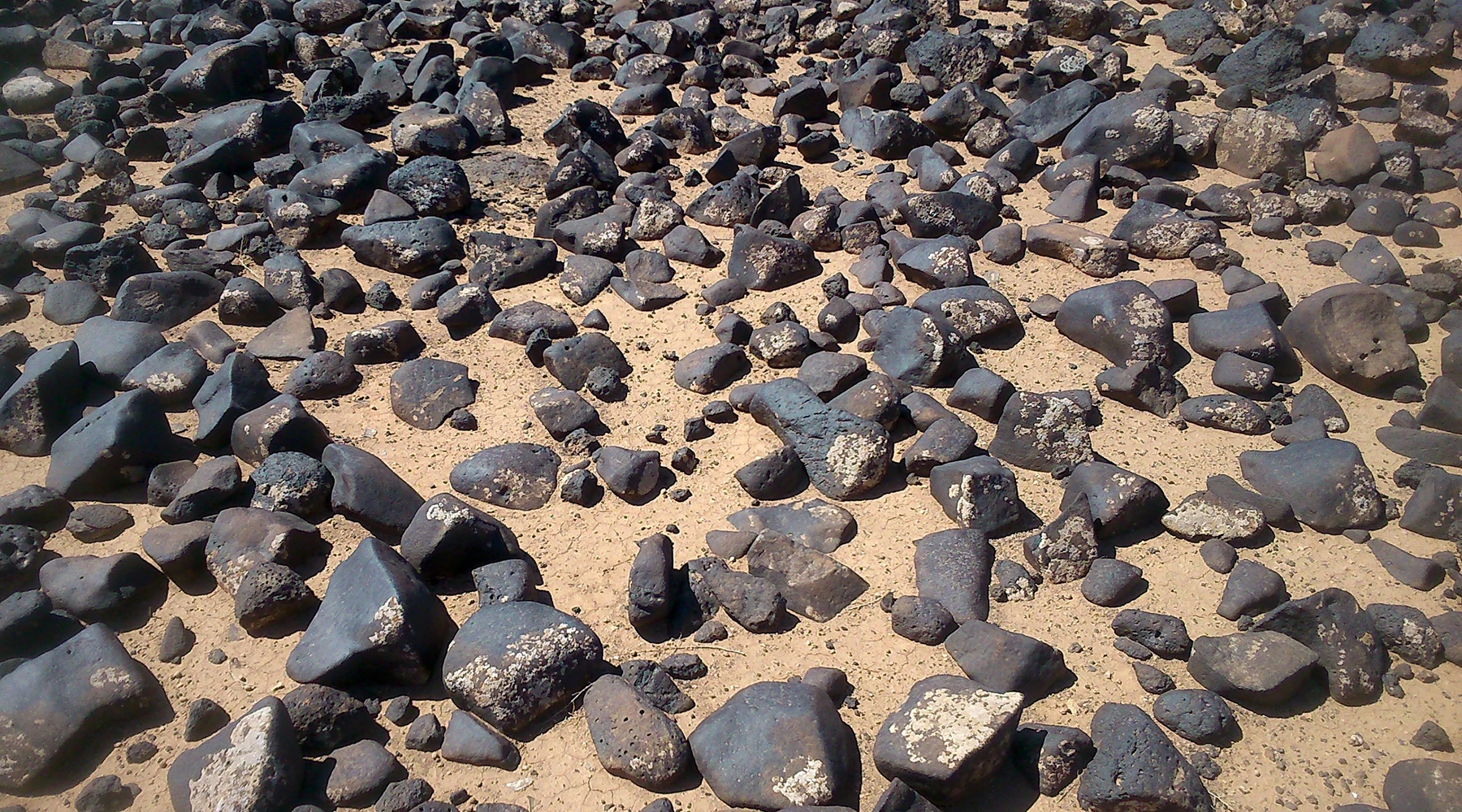
Tectonic uplift created escarpments, elevated plateaus, and basins, while volcanic activity formed vast basaltic lava fields (harraat) in northern, northeastern, and central Jordan. These black plains contrast sharply with the southern sandstone deserts, revealing the Earth’s dynamic forces still at work today.
Travelers in these regions encounter landscapes that feel both timeless and immediate: basalt cones rising from fertile plains, volcanic soils supporting agriculture, and dramatic panoramas that inspire awe.
How Jordan’s Geology Reveals Itself Across the Land
Traveling through Jordan is like flipping through the pages of an ancient book, each chapter written in stone.
The South: Aqaba and Wadi Rum
In Aqaba, travelers encounter the Precambrian crystalline basement—granites and metamorphic rocks that form the foundation of the Arabian Plate. Just beyond, the red and golden cliffs of Wadi Rum rise from the desert floor, their layers carved by wind and water over millions of years. At sunrise and sunset, the cliffs glow, revealing cross-bedded sandstones and iron-rich strata that quietly record a history of rivers, seas, and deserts.
Central Jordan: Petra and Dana
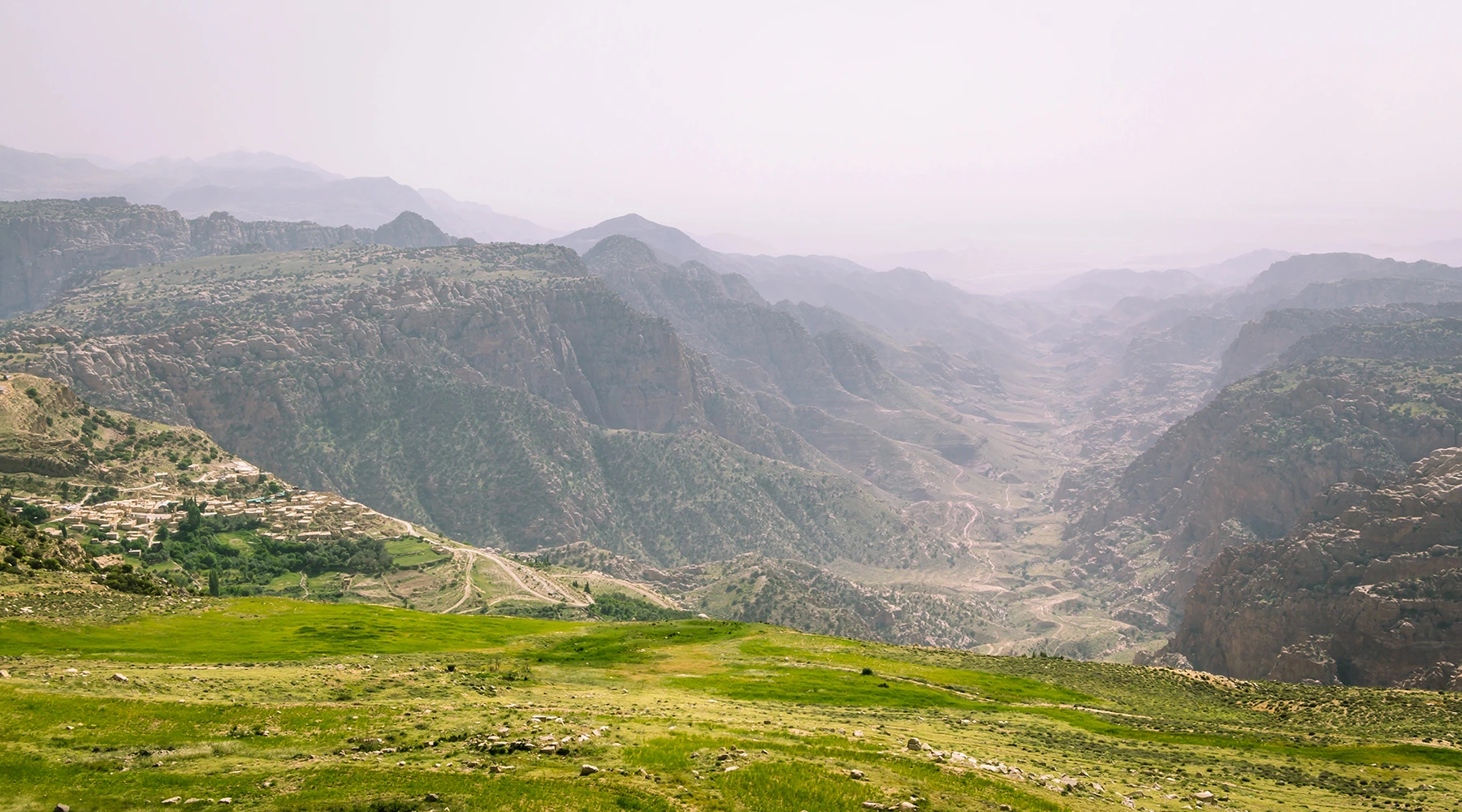
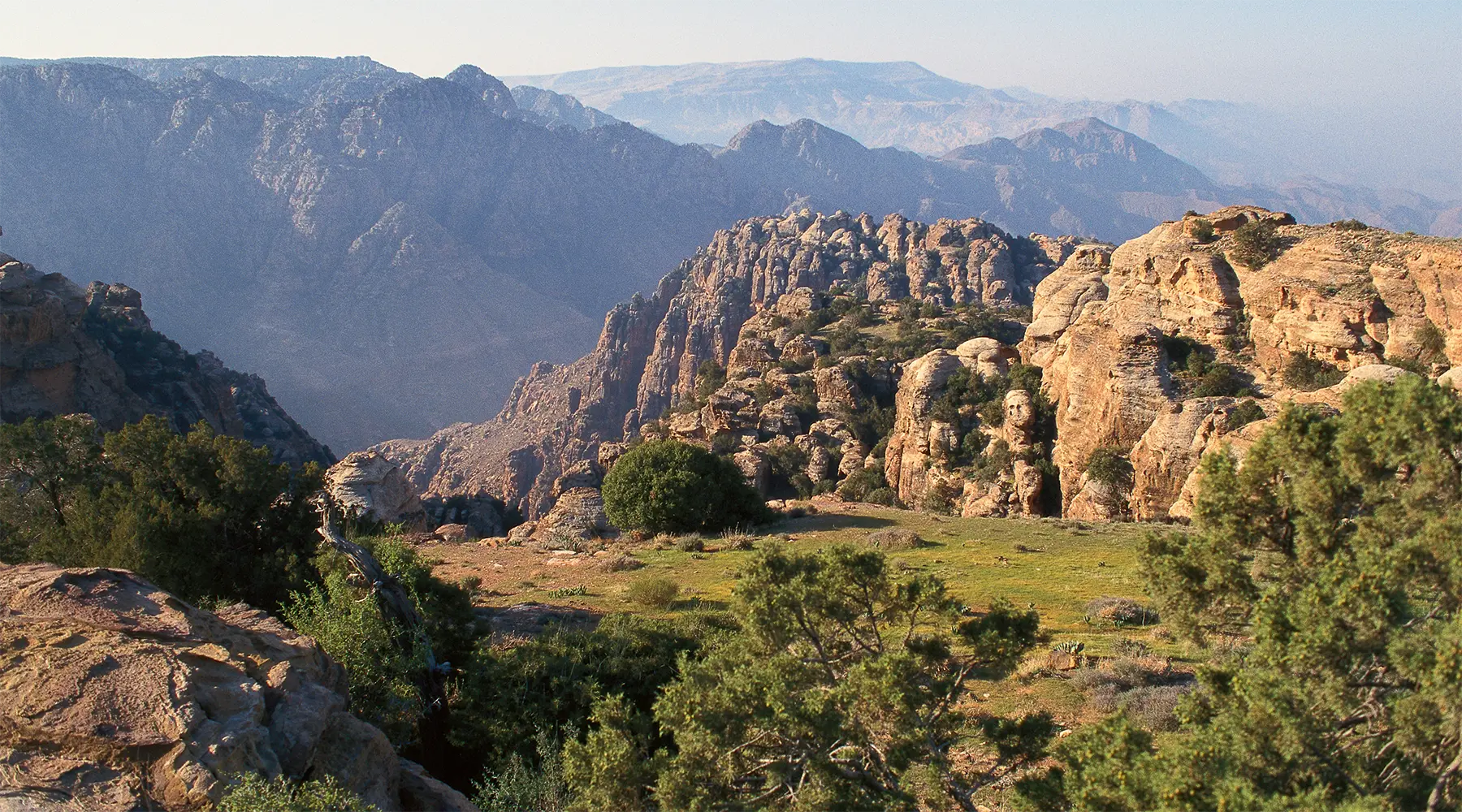
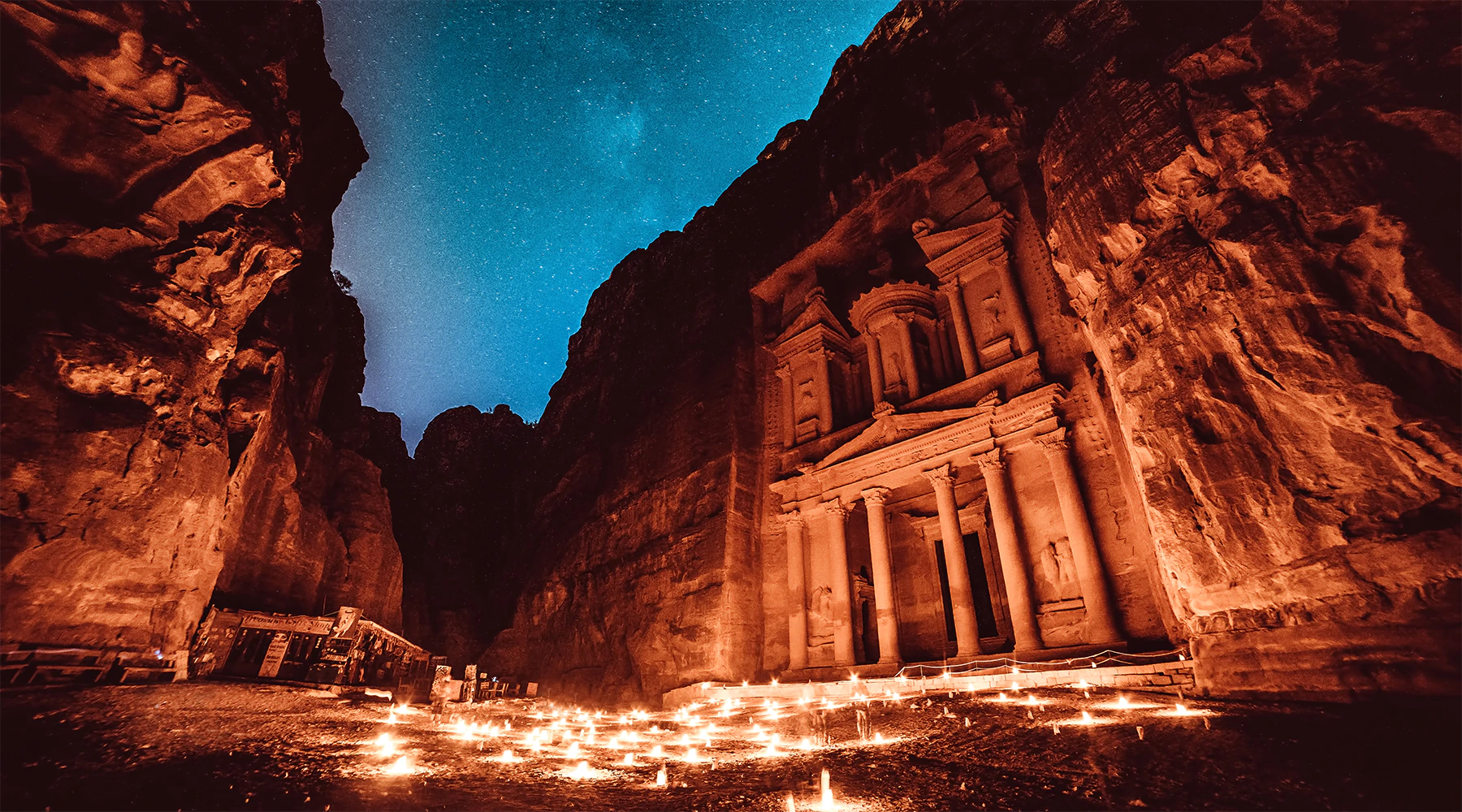
Petra is where geology meets human ingenuity. The Nabataeans carved façades directly into the rose-red sandstones, whose softness and durability shaped one of the ancient world’s most extraordinary cities. Nearby, the Dana Biosphere Reserve offers sweeping views across multiple geological layers—from ancient sandstones to limestones and marls—showing millions of years of environmental change in a single vista.
Descending from Dana, the landscape leads to Faynan, home to some of the world’s earliest copper mining sites. Here, copper-rich rocks formed through geological processes gave rise to mining and metallurgy thousands of years ago. Visitors can explore ancient shafts, slag heaps, and smelting sites—a rare encounter where geology and human history converge.
The Dead Sea: Earth in Motion
The Dead Sea lies in a tectonic basin shaped by the ongoing movement of the Arabian Plate. Mineral-rich waters, salt formations, and exposed sedimentary layers reveal a landscape still evolving today. Limestone cliffs above the valley recall the seas that once flooded the region, while evaporite deposits reflect cycles of flooding and evaporation over millions of years.
Northern Jordan and Al-Harra
In the north and northeast, Al-Harra showcases Jordan’s volcanic heritage. Vast basaltic plains, cones, and lava flows contrast sharply with the sandstone deserts of the south. These volcanic soils have enriched agriculture, while the dramatic terrain offers travelers a striking glimpse of the Earth’s fiery forces.
Geological Resources: Jordan’s Hidden Wealth
Beneath its scenic beauty, Jordan holds natural resources formed over millions of years:
- Phosphate deposits in southern Jordan, created in nutrient-rich marine conditions, remain critical to agriculture worldwide.
- Oil shale formations, preserved from calm ancient seas, can be seen across central Jordan.
- Limestone formations, widespread in central and northern regions, have long supported Jordan’s architecture and heritage.
- Basaltic rocks from volcanic activity not only shaped the land but enriched soils in northern Jordan.
These resources reveal how geology has shaped not just the landscape, but life and civilization in Jordan across millennia.
Where the Story of the Earth Meets the Journey
Jordan is more than scenery; it is a chronicle of time written in stone. Mountains, deserts, valleys, and volcanic plains are chapters in an ongoing story. Traveling through Jordan is to move across epochs: from Precambrian foundations in the south, through Petra’s sandstone marvels, to the Dead Sea’s sunken basin, and onward to northern volcanic plains.
Ancient trade routes, early mining in Faynan, and settlement patterns followed contours shaped by geology. Today, these same forces define the traveler’s experience, blending natural wonder with cultural heritage.
At Eximious Jordan, we believe that true travel emerges from understanding. To witness Jordan’s landscapes is to engage with the forces that created them, turning every view into insight, every path into a journey across time, and every stay into a connection with the Earth itself.
Jordan invites travelers not only to see its beauty but to understand its origins—and in doing so, to experience a land where the past and present meet in every stone, cliff, and horizon.
Explore More Jordan Travel Stories
What to Take Home from Jordan: Curated Souvenirs for the Discerning Traveler
From intricate mosaics to luxurious textiles and heirloom jewelry, Jordan offers discerning travelers meaningful souvenirs that embody centuries of craftsmanship, culture, and elegance—lasting treasures that connect you to the kingdom’s timeless artistic soul.
Where Time and Terrain Transform Every Hour: Exploring Jordan’s Dramatic Contrasts
In Jordan, every hour reveals a new landscape, a different era, and a deeper story. This is a country where time and terrain shift constantly—inviting travelers into a journey of contrast and wonder.

Why Jordan Is Hollywood’s Desert Jewel — And Your Next Luxury Escape
Discover Jordan through the lens of cinema, where timeless landscapes meet legendary films — from Dune to Indiana Jones. A journey for discerning travelers seeking beauty, story, and unforgettable luxury in every step.

Jordan: The Best-Kept Secret to Understanding the Middle East
Explore Jordan — the Middle East’s quiet revelation. A land shaped by history, defined by stability, and enriched by diversity, where every step offers insight into the region’s past, present, and enduring spirit.

What Amman Adds to Your Journey Through Jordan?
Discover the dynamic capital of Amman, where ancient landmarks meet contemporary culture and diverse communities thrive. Explore its historic sites, vibrant neighborhoods, and rich traditions that make Amman an essential chapter in your journey through Jordan.
Are You Designing the Perfect Journey Through Jordan? Here’s What You Need to Know
Design the perfect journey through Jordan with expert insight on timing, guides, accommodations, and must-see contrasts. A seamless, meaningful, and immersive experience awaits—crafted with intention, comfort, and unforgettable cultural depth.
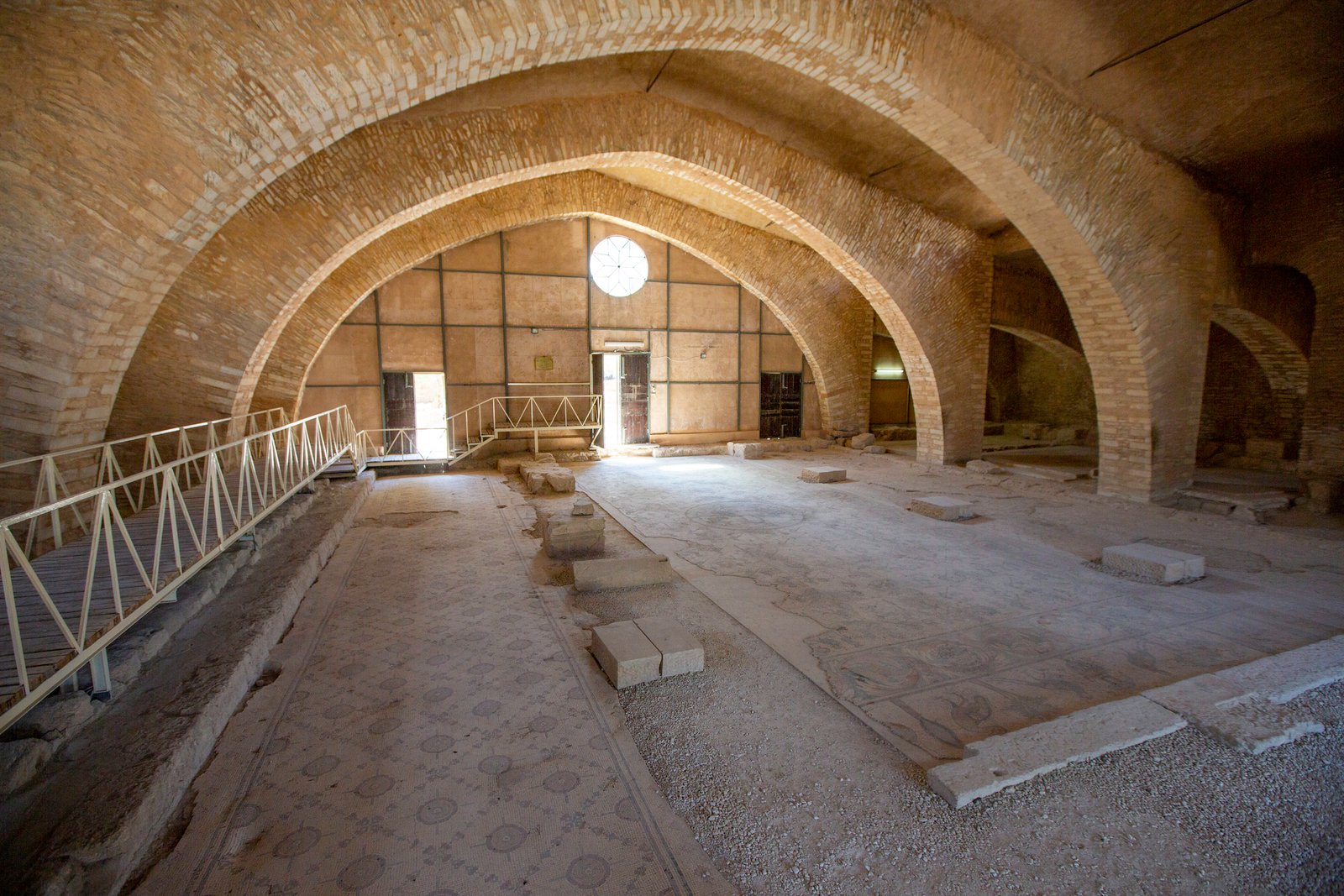
Discover Madaba: The City of Mosaics and Faith
Discover the enchanting city of Madaba, famed for its stunning ancient mosaics and rich spiritual heritage. Explore its vibrant streets, historic churches, and cultural treasures that make Madaba a must-visit destination on your Jordan journey.
Feeling Inspired by Jordan’s Wonders? Let Our Experts Help You Craft Your Perfect Journey
Let us craft an exclusive, bespoke experience tailored just for you. Our travel experts will design a personalized journey through Jordan, perfectly aligned with your unique preferences, style, and desires. Reach out today to begin your journey.